Friday, 18 September 2015

Attenborough's Hawkweed meets Sir David Attenborough!

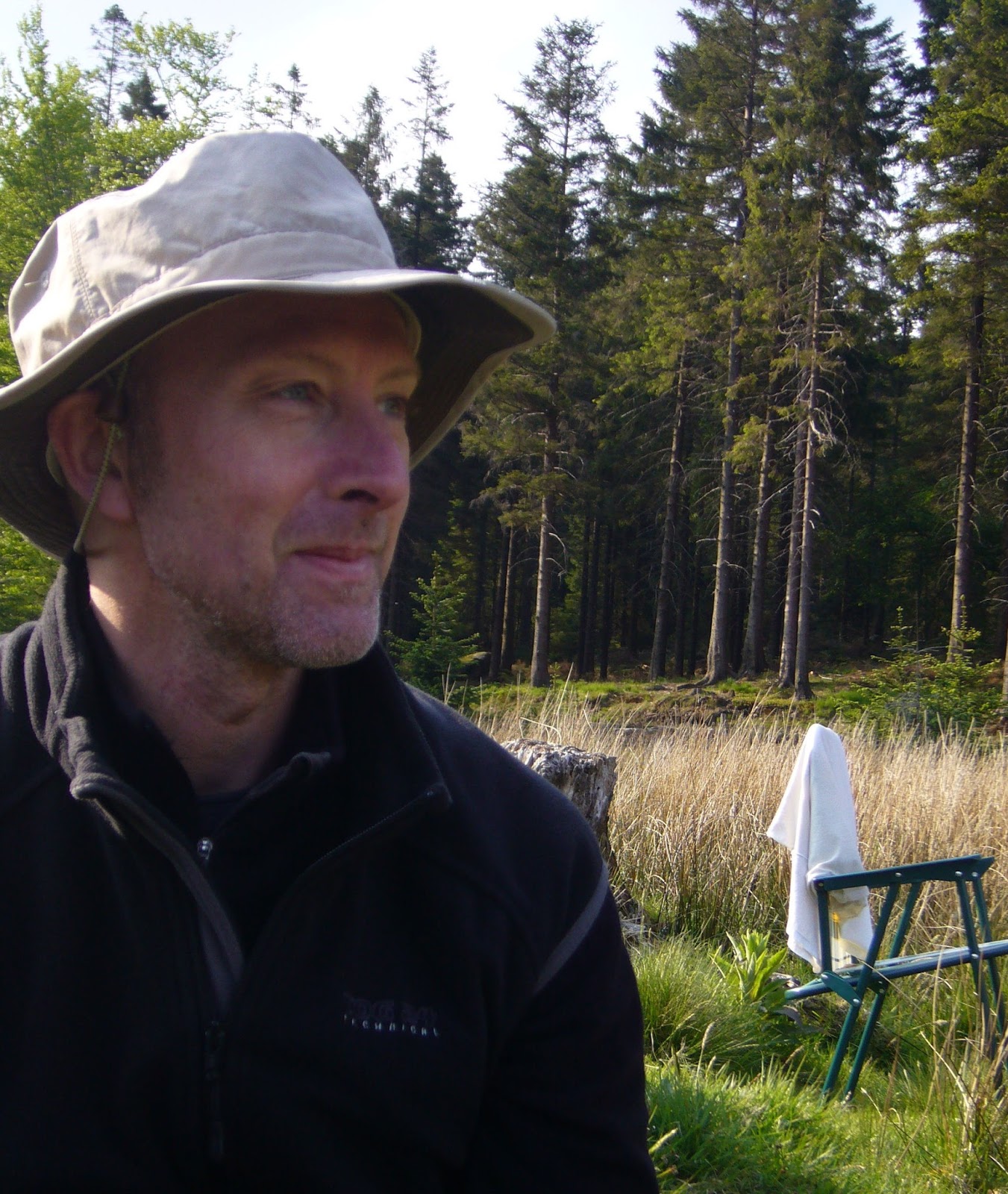
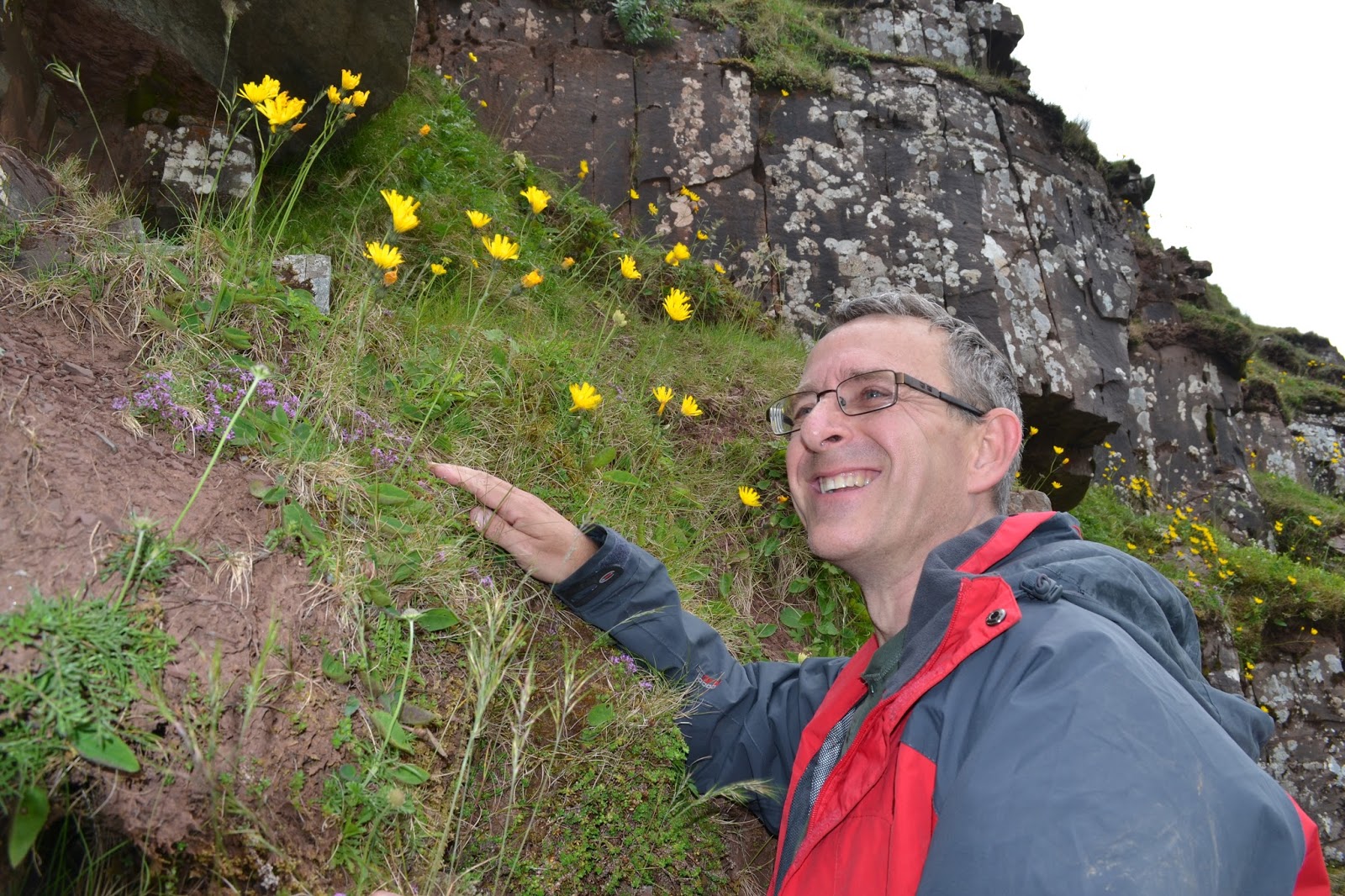
Tim Rich and Attenborough's Hawkweed
Image: J. Daggett
Lovely to see BSBI expert botanist Dr Tim Rich meeting his hero Sir David Attenborough on BBC's One Show just now! 

Tim was in the studio with Sir David and had brought along a small live specimen of Hieracium attenboroughianum. This is the Hawkweed which Tim discovered in Wales last year and named after his hero. The new species was described in New Journal of Botany last December.

The programme is available here on iPlayer (around 10 minutes in) so even if you missed it, you can catch the encounter between Sir David and our Tim, and hear how the young Tim was inspired to become a botanist/ecologist after seeing Sir David's TV programme World About Us. 

Let's hope that a few youngsters watching the programme are also inspired to follow a career in natural history. Maybe in a few decades, we'll turn on our TVs and see a fresh-faced youngster presenting Tim with a new species named after him?!

Three cheers for Sir David Attenborough and Dr Tim Rich, informing and inspiring the next generation of naturalists!

Thursday, 17 September 2015

Commemorating Oliver Rackham: Part Two

Prof Oliver Rackham & colleagues.
Note the Prof's famous
red socks & sandals combo!
Image courtesy of J. Moody
Last month, we reported on plans under way for events to commemorate Prof Oliver Rackham, including a Commemorative Symposium to be held in Cambridge over the weekend of 13-14 August 2016. If you would like to attend, you will need to indicate interest here before the end of September.

There is more info here on the University of Cambridge's Dept of Plant Sciences website. The team behind the Rackham commemoration events have also released this pdf which gives links to conferences and other international events dedicated to Prof Rackham's memory.  

Facebook page for Oliver has been set up and the pdf also gives details of another upcoming event: the inaugural National Coppicing Day, which will take place on what would have been Oliver’s 76th birthday, 17 October 2015. Events are planned at various woods around Britain and there is another Facebook page for more information about them.

Prof Oliver Rackham 
Image courtesy of J. Moody
The pdf also explains what is happening to Prof Rackham's herbarium and archive. Good to see that his specimens have been relocated to the Cambridge University Herbarium, where they now sit alongside specimens collected by Darwin and Henslow. 

Photography of the herbarium specimens is apparently well under way, with over 1000 specimens already digitised. If you are interested in viewing the Herbarium, please email Christine Bartram to arrange a visit. 

The pdf also explains that "Oliver's archive - notebooks, papers, slides, photos, etc - is moving to Corpus Christi College as The Rackham Archive, where it will be under the care of Dr Lucy Hughes, the college archivist, and eventually accessible to scholars. 

"If you have a story or memory about Oliver that you would like to contribute to the Rackham Archive for posterity, please write it up and send it to Dr Lucy Hughes."
Sunday, 13 September 2015

PlantNetwork training and networking events

Tree safety training day, 2015
Image courtesy of PlantNetwork.
Good to hear from Pam at PlantNetwork about two training and networking events planned for this autumn.

If you haven't yet encountered PlantNetwork, they are the national network of botanic gardens, arboreta and other documented plant collections. 

They aim to promote botanical collections in Britain and Ireland as a national resource for research, conservation and education and they run meetings, conferences and training events throughout the year. 

Plant records training day, Harlow Carr, 2014
Image courtesy of PlantNetwork.
You can find out more on their website here. 

Pam wonders if any BSBI botanists would like to attend the Seed Collection and Storage Training Day at Wakehurst Place on 22nd October which includes a workshop on herbarium specimen collecting

Speakers and demonstrators will include staff from Kew, the Millennium Seed Bank, Heritage Seed Library, including staff involved in collecting projects and expeditions.

Or there's this year's PlantNetwork Autumn Conference which will be held in Nottingham on 4th-5th November. The theme this year is Plant Collections management: keeping it legal, ethical and relevantFollow the links for more info and to book.


Networking opportunity during the coffee-break.
Teaching & research in botanic gardens
Training day held at LUBG, 2015
Image: L. Marsh 
I had the pleasure of meeting Pam earlier this year at a PlantNetwork training/networking day, hosted by University of Leicester Botanic Garden, focused on teaching and research in botanic gardens. I had been invited to offer a presentation at the event on 'plant identification courses and engaging with the local botanical community'

This proved a great opportunity to talk about the synergy between the BSBI VC55 local botany group and the plant identification courses for beginners and improvers offered at University of Leicester Botanic Garden

And of course to flag up BSBI resources for training botanists and the excellent Field Identification Skills Certificate which BSBI supports and which is fast becoming the "industry standard" for British botanists.

Thursday, 10 September 2015

Ellen Hutchins: Ireland's first female botanist. Part 2

This woodland walk attracted around 70 people
Image courtesy of C. Heardman
Huge crowds turned out for the recent commemorations in West Cork for Ellen Hutchins, Ireland's "first female botanist", who died 200 years ago.

We reported here on plans for the celebrations and those of you who follow BSBI on Twitter and Facebook will have seen some of the heart-warming images which illustrate this page. Hundreds of people turned out to find out more about Ellen.


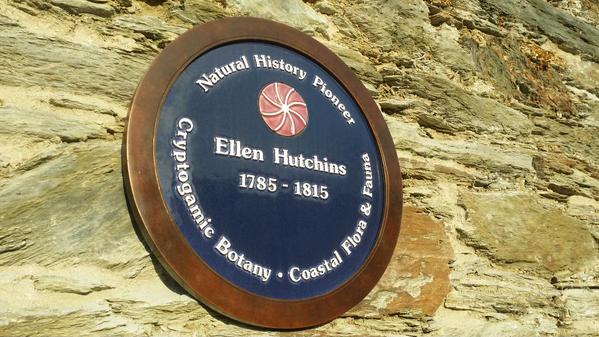
One of two plaques commemorating Ellen
Image courtesy of C. Heardman
Many thanks to Clare Heardman of Glengarriff Woods NR, one of the organising team and BSBI's County Recorder for West Cork, for sharing the images on this page via social media. 

She and co-organisers Madeline Hutchins (Ellen's great-great-grand-niece) and Angela O'Donovan (Bantry Historical Society) are to be congratulated on such an amazing week of events, which achieved extensive media coverage in Ireland. 


Micheline (on right) tells visitors about
the plants of Whiddy Island
Image courtesy of C. Heardman
They estimate that the Ellen Hutchins Festival attracted almost 1,000 people to the various events, which formed part of Ireland's Heritage Week

People came from across Ireland and even from the UK. John Crellin, BSBI's County Recorder for Brecknockshire, travelled to Bantry and his account of the visit is here.

Demonstration by award-winning botanical artist
Shevaun Doherty at Bantry House
Image courtesy of C. Heardman
Events included two talks, seven guided walks, a demonstration of botanical illustration techniques, a children's nature event, two exhibitions featuring Ellen's drawings and specimens and the unveiling of two plaques to "Ireland's first female botanist". 

One of the walks was led by Rory Hodd, ace Irish botanist and bryologist (and a member of the BSBI Ireland 'Rough Crew') and another to Whiddy Island was led by Micheline Sheehy-Skeffington

Ooh I have some gossip for you - I hope Micheline won't mind if I tell you that she has been proposed as a member of the Editorial Board of New Journal of Botany, subject to approval by BSBI Publications Committee at their meeting next month. You can listen here to Micheline's appearance on BBC Radio 4's 'Woman's Hour' - I think Ellen would have approved!  

Monday, 7 September 2015

Flat-sedge: on a Cumbrian road-verge and in New Journal of Botany

Simon Smart shares the third and final instalment in his tale of the thirteen-year gestation of this paper in the forthcoming issue of New Journal of Botany. Part One is here and Part Two is here.


Simon is out of the woods:
he has the TPP data he needed!
Selfie by S. Smart
We left Simon smiling again, having found that the data collected by BSBI members for the Threatened Plants Project (TPP) was just what he needed: you can read more about the TPP here and find out why it fitted the bill so well! 

Simon takes up the story: 

"Another of the species we analyse in the paper is the similarly divine Blysmus compressus". [LM: Click on the link to see a Species Account for this TPP target plant, prepared by Dr Kevin Walker.] 

"In the paper, we use the occurrence of B. compressus on a road verge between Orton and Appleby in Cumbria (pictured here and in the paper) as a test of how you might apply the probabilities for each neighbour species to a new population. 

"In fact, this population was discovered by me in 1996 during repeat survey of a series of fixed plots, set up by the then Institute for Terrestrial Ecology (now the Centre for Ecology & Hydrology) to monitor the success of Cumbria's conservation-oriented Road Verge Management Strategy. 

"The population seemed to be growing, unusually, in a refuge on a linear feature rather than in adjacent improved grassland. I am due to visit the site again this summer when re-recording of the quadrat will allow a test of how the method can be used to measure change in neighbour probabilities over time and thus evaluate prospects for the continued persistence of B.compressus


Road verge with population of B. compressus
Image: S. Smart
"Revisiting the site will be very convenient since, bizarrely, my mum has just moved to Great Asby only 3 miles to the south (not because she likes Blysmus, I must add, but because she didn’t like Swindon!)

"So, after ten years we were finally able to realise our goal and it's largely thanks to the Threatened Plants Project! 

The ideas were also tested on very receptive audiences at the BSBI's Annual Exhibition Meeting in London in 2011 and again at the BSBI/RBGE Mapping Conference held in Edinburgh in 2012.[LM: This is where Simon and I first discussed the possibility of publishing his results so far in New Journal of Botany, a mere three years ago!] 

"Finally, we ran our ideas past delegates at the Vice-County Recorders Conference in Shrewsbury earlier this year. Hence on behalf of all my co-authors we extend our thanks for the invitations to speak and especially to Louise Marsh and Alex Lockton". 

Many thanks to Simon for sharing the story behind this paper and for his kind words!

Spot 2 of Simon's co-authors trailling survey methods
for the National Plant Monitoring Scheme:
Kevin Walker on right
Oli Pescott in blue hat
Image: M. Pocock 
So, after thirteen years of work, 'Common plants as indicators of habitat suitability for rare plants; quantifying the strength of the association between threatened plants and their neighbours' by S. M. Smart, S. Jarvis, K. J. Walker, P. A. Henrys, O. L. Pescott and R. H. Marrs, is published in New Journal of Botany

BSBI members can view the paper on-line at the weekend, with print copies to follow, and any member who filled in a Threatened Plants Project form a few years ago can feel justly proud of the data they contributed and how it was used.

If you're not yet a BSBI member, I'm afraid you can't read this or six other papers and four book reviews in the forthcoming issue of New Journal of Botany, or any of our back-issues since 2011, or benefit from our panel of 100+ expert plant referees, or claim amazing discounts on selected botany books... 

Although we offer loads of free ID aids and other resources to non-members, you really should think about joining us if you want the full BSBI membership experience. But don't join today! Wait until 1st October and we'll give you three free months, so your one year's membership subscription will carry you all the way through to the end of 2016. That's £2 a month to be a full member of the amazing BSBI community!  

Sunday, 6 September 2015

Threatened Plants Project to the rescue!

Could Simon be pondering how to
get hold of the data he needs?
Selfie with Skunk-Cabbage by S. Smart
Yesterday, we left Simon Smart, lead author of a paper in the forthcoming issue of New Journal of Botany, thinking about how to model rare plant species in terms of the faithfulness of their more common pals. But Simon was painfully aware that he didn't have the data needed to carry out a meaningful test across many species. 

At this point, BSBI came to the rescue in the form of the excellent Dr Kevin Walker, our Head of Science, and the Threatened Plants Projecta five year BSBI initiative to learn more about species assessed as 'Threatened' on the Vascular Plant Red Data List for Great Britain (2006)

Many BSBI members contributed records to the Threatened Plants Project so you could say that it's down to our members and the data they collected that Simon was able to realise his goal! Simon takes up the story:

Holly Fern Polystichum lonchitis
Image: S. Smart
"The whole idea had been shelved until the wonderful Threatened Plants Project (TPP) began to yield just the data we needed, focusing as it did on rare and vulnerable plants in Britain. Critically, the method included placing quadrats around individuals and recording associated plants. I was involved in some delightful field work recording some of the TPP plots with Kevin Walker

"Some memorable days of botany ensued, particularly being awe-struck by the leathery, saw-toothed beauty of Polystischum lonchitis here growing on the limestone pavement above Settle and which Kev opined might be the most southerly plant in Britain! I had never seen the species before and it was wonderful to see it at last.

Kevin Walker at the press launch for the
England Red List; Kew, 2014
Image: L. Marsh
 
"This is one of the six species we analyse in our paper based on the unique TPP dataset that finally allowed us to test a germ of an idea, namely that Bayes Theorem might be a simple way of quantifying the association between rare plants and their neighbours, but including the commonness of the neighbour species to weight the indicator status of each neighbour. 

"We have yet to crack the next challenge which is to include, in a simple way, the patterns of association between these neighbours in the presence and absence of the rare species".

Tune in tomorrow for the final part of the story, when Simon turns his attention to another TPP species and - after a mere eight years - feels ready to start presenting his ideas at BSBI meetings and conferences. 

Saturday, 5 September 2015

Latest issue of New Journal of Botany coming soon

Apologies to our members that publication of your August issue of New Journal of Botany has been unavoidably delayed. We are very sorry that you are having to wait a little longer than expected, but the new issue should be available on-line by the end of the week and in print soon after. 

Simon looking pleased: could it be
because his paper is finally being published
in New Journal of Botany?
Image courtesy of S. Smart
In the meantime, we can offer you the inside story of how a long-awaited paper in the next issue of New Journal of Botany came to be published. 'Common plants as indicators of habitat suitability for rare plants; quantifying the strength of the association between threatened plants and their neighbours' is co-authored by S. M. Smart, S. Jarvis, K. J. Walker, P. A. Henrys, O. L. Pescott and R. H. Marrs. 

It's quite a long tale which starts over a decade ago, then hits what seemed at the time to be an insurmountable problem, until help came along in the form of BSBI's project to... but I'll let lead author Simon Smart tell you the whole story:

"We are proud to present this paper in the next issue of New Journal of Botany. It has been a long time in the making. It all started in 2003 when I led a DEFRA-funded project looking at ways of modelling the impact of atmospheric nitrogen deposition on plant species and vegetation. We had begun developing regression-type niche models for many common plants; a system later to become the MultiMOVE package also reported in the forthcoming issue of New Journal of Botany!"

[You will also be able to read 'Niche models for British plants and lichens obtained using an ensemble approach' by P. A. Henrys, S. M. Smart, E. C. Rowe, S. G. Jarvis, Z. Fang, C. D. Evans, B. A. Emmett and A. Butler in the new issue of New Journal of Botany.]

Back to Simon and the problem he was chewing over: "Basically this means coming up with a numerical way of describing where a species tends to live in terms of those environmental factors that affect it. So a plant species niche model quantifies for example whether a species likes a drier climate, grows in short vegetation and at low fertility but high soil pH. 


"Simon realises the wonderful import
of his idea, and, for a moment, forgets
 to give the world his normally
ever-present smile"
Caption: Oli Pescott
Selfie with Skunk Cabbage: Simon Smart
"An outstanding question was how to model the niches of rare plants. The big problem was a simple lack of data. What we needed were quadrats that recorded both rare species and the common species with which they grew, but with enough quadrats to meaningfully represent the species’ ecological range across Britain. 

"As part of the Nitrogen Impacts Project, Mark Hill and David Roy initially trialled a method based on the association between common and rare plants. 

"The idea is that rare species tend to grow with particular groups of more common or even other rare species. I think the first person I heard talk about this was Phil Grime referring to these faithful neighbours as ‘pals’ of the rare plant. 

"The big problem was simply lack of data to carry out a meaningful test across many species. At the time it seemed that there must also be a way of factoring in the commonness of the species growing with the rarity but without including endless numbers of plots in which the rarity was never likely to grow. 

"Mark Hill described a situation for example in which you might think of including plots without the rarity, but where should you draw the line? Plots from, say, a rainforest in Borneo wouldn’t be likely to sample a British rare plant yet these absence data would appear to increase the accuracy of your model! But is it really sensible to include them?"

We need to leave Simon at this point, wondering where to draw the line and with his excellent idea shelved due to lack of data. Tune in tomorrow to find out what happened next, the role played by BSBI members and how the paper finally came to be published.