Saturday, 28 June 2014

BSBI members busy in Cambridgeshire

Alan Leslie studying Orobanche
Image: M. Frisch. 
BSBI members in Cambridgeshire have been busy over the last few months. Monica Frisch sends us this report:

"We enjoyed two Cambridge Flora Group excursions to Eversden on 31st May and to the Kennett area on 12th June. The following two days, 13th and 14th June, several BSBI members had displays at the Cambridge Natural History Society's 95th Conversazione, its Annual Exhibition.

"Many BSBI members are active with Cambridge Natural History Society which also organises regular surveys and excursions, with talks between October and April.

Trifolium resupinatum at Kennett
Image: M. Frisch
"We had a glorious day at Eversden, confirming the continued existence of Danewort Sambucus ebulus, which may be one listed by Relhan (1802), and refinding the Small-flowered Sweet-briar Rosa micrantha seen here by Chris Preston and Derek Wells in 1997. We found a fine patch of Knapweed Broomrape Orobanche elatior and, in a corner of a field missed by the herbicides, Shepherd's Needle Scandix pecten-veneris.

"At Kennett we spent most of the time in the old sandpits now much altered and used by Wild Tracks Offroad Activity Park. We didn't find as many of the Breckland sandy soil specialities as expected, though Alan Leslie knew where to find the Smooth Cat's-ear Hypochaeris glabra and Bur Medick Medicago minima


Jon Shanklin's exhibit at the Conversazione:
 grasses, posters, BSBI News & BSBI bookmarks!
Image: M. Frisch
"What we did find were quite a lot of aliens, the most surprising of which was Reversed Clover Trifolium resupinatum. We also walked around some fields at Dane Hill Farm, where we refound and admired some large and very ancient Black Poplars Populus nigra and a field margin with several species of Goosefoot. As well as the common Fat-hen Chenopodium album there was C. ficifolium, C. hybridum, C. murale and C. polyspermum enabling the differences to be clearly seen.

"Jonathan Shanklin had prepared a poster about the Cambridge Flora Group for the Cambridge Natural History Society's 95th Conversazione, as well as putting up displays of his own about liverworts in Cambridgeshire and about the lawn outside the Department of Zoology, where the Conversazione is held. The lawn is now in the middle of a building site so it is not possible to see which have survived, or indeed what new species have appeared since.

Dr Mark Hill and Dr Chris Preston:
 rare pic of 2 celebrated biological recorders
Image: M. Frisch 
"Mark Hill and Chris Preston also had a display about Cambridgeshire mosses, with microscopes for examining specimens, which proved very popular with visitors. 

Monica Frisch put up her photos of Botanising in Cambridgeshire, first seen at the BSBI Annual Exhibition Meeting in November 2013, augmented by some pictures from this year's excursions. She and her friend Meg Clarke also had a display about Hayley Wood, an ancient woodland which they have been visiting regularly for the last five years. Plants also featured in several other displays.

Many thanks to Monica for this report. Very envious of the nice plants you've seen and the vibrant botanical community in Cambridgeshire. If your county doesn't yet have a local botany group, it's easy to set one up and you could soon be seeing lovely plants in lovely places in the company of lovely botanists. And arranging your first Conversazione! 

Tuesday, 24 June 2014

Botany on the airwaves

Solanum dulcamara
Image: J. R. Crellin http://www.floralimages.co.uk/
Seems like you can't turn on the radio at the moment without hearing about botany and how we record and classify plants. Not complaining, just trying to keep up with so much good stuff around!

This morning the fabulous Sandy Knapp was on Jim Al-Khalili's The Life Scientific on Radio 4. Click here to listen again on iPlayer. My favourite quote was Sandy saying that becoming a scientist is like being given a licence to have a great time. For a woman whose important work on Solanaceae will, as Jim Al-Khalili said, still be referred to when we are all dead and gone, she is remarkably modest and down-to-earth, with a great sense of humour. Just like most botanists you meet, actually!

Last night Shared Planet featured Mark Avery talking about natural history - click here to read how RSPB's former Conservation Director is getting interested in plants. Nice to see what happens when botanists point out what is growing on a site and how that helps you interpret it and put former land use into a cultural/historical context. Click here to listen to Shared Planet on iPlayer.


Kew at night
Image: W. Arshad
And there's more to come: a 25-part radio series has been made, examining the history of RBG Kew, its contribution to scientific research and its future in these financially-straitened times. The series, called Plants: From Roots to Riches, will be broadcast on consecutive days starting on 21st July, and will be available on iPlayer here - there is also a tie-in book. Professor Kathy Willis, Director of Science at RBG Kew, will present the programme and has co-authored the book. There's an excellent piece about the series here in the Telegraph, and here the Controller of Radio 4 talks about the programme. 

If you need pictures with your words, here's a video of Kathy talking about biodiversity and here's a video of Sandy on taxonomy. Inspirational scientists who also happen to be female ;-)

Monday, 23 June 2014

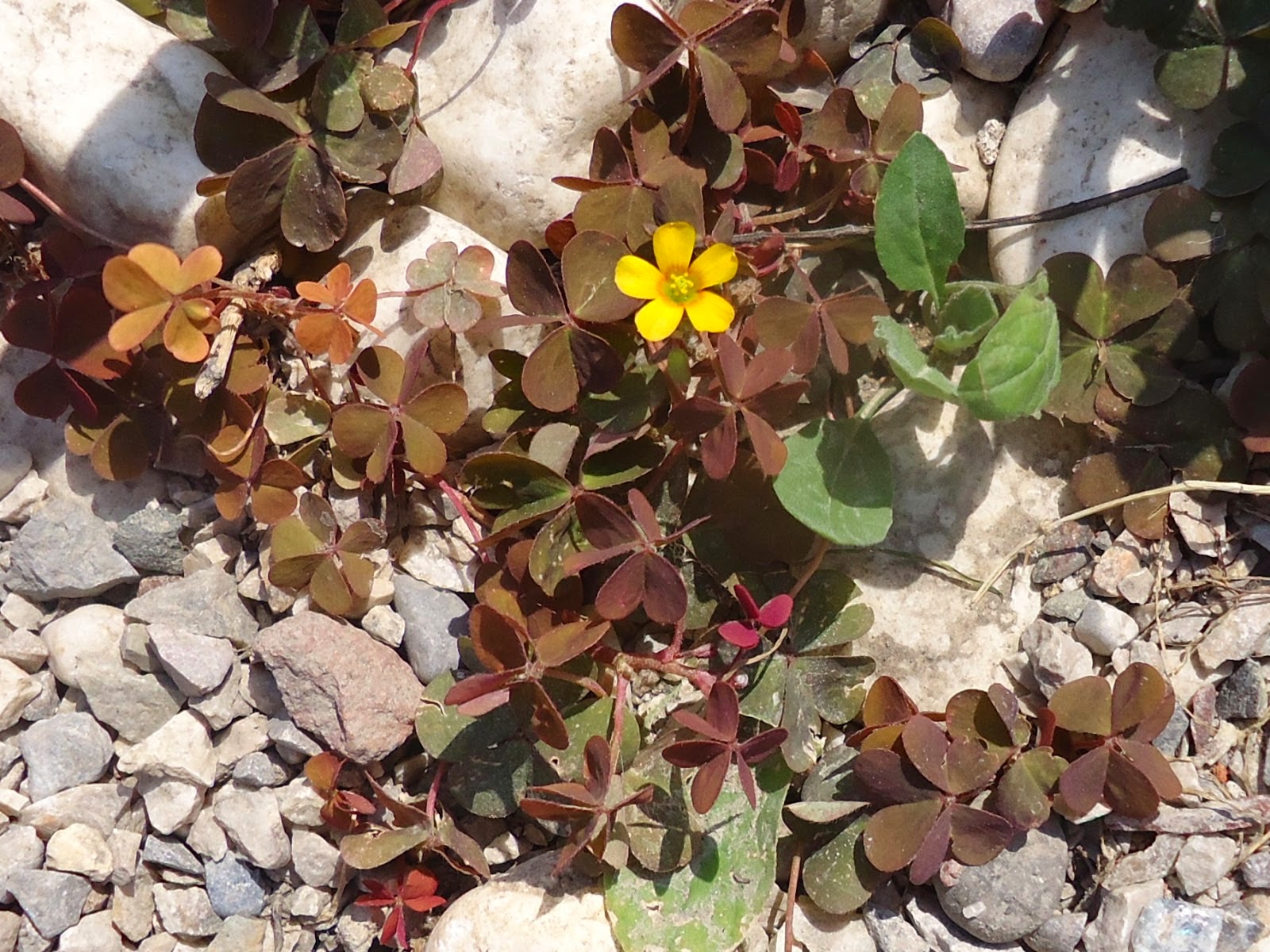
Request for material of Oxalis corniculata

We've had another request for material, this time from Quentin Groom at the Botanic Garden, Meise. Quentin asks for material of Oxalis corniculata which he says has become "an almost ubiquitous weed of plant pots and borders. Its explosive capsules and sticky seeds let it jump, like a vegetable flea, from pot to pot. This phenomenon is not unique to Britain and Ireland. All across Europe O.corniculata can be found in similar situations.

"Linnaeus first described the species from Europe, but it is not clear if it is native here. Close relatives exist in North America, Asia and Australasia. It has an extremely plastic phenotype depending on habitat. Characters such as hairiness, leaf size and habit all overlap between species in this group, even though these species do not hybridise readily. It is for this reason my colleagues and I at the Botanic Garden Meise (Belgium) are trying a molecular genetic approach to understanding the O. corniculata group. We are hoping to be able to unravel the phylogeny of these taxa and more precisely define the taxon boundaries. Perhaps we will even get indications of its geographic origins.

"We are looking for specimens (fresh or rapidly dried) of plants in the O. corniculata group from as many places as possible. In addition to O. corniculata, the corniculata group includes O. corniculata var.  atropurpurea, O. dillenii, O. exilis and O. stricta. It doesn't matter if you can’t identify it with certainty, but it would help us match molecular and physical traits if you are able to provide a specimen with fruits and flowers. Nevertheless, even non-fruiting material will help".

If you can help Quentin, please contact him here.

Saturday, 21 June 2014

More from Roudsea Wood

Mike (on left) shows people C. xboenninghausiana
Image: M. Dean
Mary Dean has been in touch to tell us a bit more about Mike Porter's recent workshop/field meeting focusing on More Cumbrian Sedges at Roudsea Wood and  Mosses NNR.

I'm always amazed at how much Mike gets done - he is also writing the Viola Handbook and editing Plant Records for New Journal of Botany.

Mary says "As usual, Mike Porter's Sedge meeting was fully booked. The meeting visited the wonderful Roudsea Wood and Mosses NNR

Botanists brave the rain to learn Sedges with Mike!
Image: M. Dean
"We managed to find the one rainy day sandwiched between two sunny ones, but, as expected from a group of keen botanists, the rain didn't dampen our enthusiasm.

"We saw 25 different Carex taxa, an incredible range on one site. 

Rarities included Carex flava (Large Yellow-sedge) and its hybrid with C. demissa, C. digitata (Fingered Sedge) and the hybrid C. remota × paniculata (C. ×boenninghausiana). 

"We did look at some of the other rarities such as Sorbus lancastriensis (Lancashire Whitebeam)".

Thanks Mary! And a reminder that most BSBI field meetings and workshops do get booked up really quickly, but it's always worth checking with the organiser and asking if your name can be added to the waiting list, in case anybody drops out.

Wednesday, 18 June 2014

Do you know your palustrine plants?

Ros and students learning in the field
Image: courtesy of Field Studies Council
I was just chatting to Sue Townsend, Secretary of BSBI's Training & Education Committee and FSC Biodiversity Learning Manager, and heard some surprising news. One of this year's plant ID courses, taught by Ros Bennett is not yet fully booked. This is unusual, as Ros's courses usually fill up really quickly, because her reputation as one of the best botanical tutors around precedes her!

So, I thought I'd nip over here and post something quickly, make sure our botanists knew about this rare opportunity to get on to one of Ros's courses. Take a look at the course details here and see what you think. It runs from 21st-24th July at Slapton Ley NNR, and Ros will be teaching ID of the grasses, sedges and rushes of damp places, and using vegetative as well as flowering characters to help with identification. There will also be some introductory work on willows and ferns, so if you've always shied away from these groups - now's your chance to make a start on them.


Coastal plants at Slapton Ley
Image: courtesy of Field Studies Council
I've never made it to one of Ros's courses - they are always booked up by the time I try! - and this one clashes with the start of this year's Hebridean Recording Extravaganza. But at Training the Trainers last year, I had the pleasure of attending her session on teaching the Top 20 Plant Families. 

Ros was kind enough to send me the presentation afterwards as a pdf and you can view it here. It makes fascinating reading if you have ever tried to teach - or been taught - the main plant families represented in Britain. Before you look at the pdf - which do you think will be the Top 20 Plant Families? Then see if you agree with Ros!


Slapton Ley NNR offers freshwater and coastal habitats
Image: courtesy of Field Studies Council
I do hope Sue was just teasing me when she wondered if having the word 'Marsh' in the title had put people off joining the course? Marshes can be very pleasant, you know... and they do support some very nice plants. So please put aside any palustrine prejudices you may hold and consider learning to ID some lovely Marsh plants with Ros Bennett next month. 

If you do attend, please let me know how you got on and we'll publish the photos of you and your marshy friends from Slapton Ley here on the News & Views pages, so everybody can see just how nice they are :-)

Tuesday, 17 June 2014

Flora's Flora Group spots... a golden eagle!

Myrica gale Bog Myrtle in flower, Uist 2014
Image: F. Donald
Great to hear from Flora Donald on South Uist about their local botany group, formed after Flora met Paul Smith, the VC Recorder for the Outer Hebrides, and his team on South Uist last summer at a Bioblitz on the island

Flora says "The Uist Botany Group has had three field meetings so far, so I thought I should send you a quick update of what we’ve being doing!" [LM: Note that Flora didn't call the group Uist Flora Group, to avoid any hint of megalomania!]

"Our first foray was out to the old plantation at Loch Druidibeg in mid April. The season takes a while to get kick started in the Uists so we were worried that there wouldn’t be much to see - but we soon found colourful patches of Viola riviniana and V. palustris and the wonderfully scented Myrica gale in full flower to cheer us up. We also discovered two bushes of Juniperus communis which have grown up now the area is protected from grazers by an enclosure.

Flora (in peaked cap) and some of Paul Smith's
Hebrides Recording Team 2013
Image: L. Marsh
"All of the participants in botany group meetings are multi-talented and have a wide range of interests, including mosses, fungi, birds, moths and beetles to name but a few. So we can’t help but come back from botanical meetings with a couple of records of other things to send to our local biological recording group

"Our second meeting was held out at Allt Bholagair SSSI which yielded sightings of a large red damselfly, moss carder bees and a golden eagle as we walked out towards it. For most of you, the idea of visiting a gorge which hosts some naturally regenerating woodland probably isn’t particularly exciting but for us it’s quite novel! We were able to have a squint at plants which we very rarely get to see otherwise: Populus tremula, Allium ursinum, Fragaria vesca, Oxalis acetosella and Teucrium scorodonia". [LM: Southern members may smile at the casual mention of the Golden Eagle, compared to excitement generated by Wild Garlic and Wood Sorrel!]

Platanthera bifolia on South Uist 2013
Image: L. Gravestock
"Last weekend we had our third trip out in South Uist, covering a small section of coast bordering the South ford (separates South Uist from Benbecula). It was a lovely warm day and the season is now in full swing so we returned with our fullest recording card yet! The stars of the show were undoubtedly the orchids - we’re still scratching our heads a bit with some of them but are confident with Platanthera bifolia, Dactylorhiza incarnata subsp. coccinea and Dactylorhiza maculata.


Flora closes "Keep an eye on the VC110 and the Uist Botany Group Facebook pages for details of upcoming meetings and please come join us on an excursion whether you’re a resident or just passing through!" 

Viola riviniana on Uist
Image: F. Donald
Many thanks to Flora for this report on Uist botanising and for reminding us that it's always a good idea, if you are visiting another part of Britain or Ireland this year, to contact the VC Recorder or the local botany group and find out if there are any field meetings happening, or enquire about good sites to visit (and any to avoid). 

And our county recording cards - found by scrolling down to the bottom of our Resources page - will help you record the plants most likely to be seen in that county. Don't forget to send your card, once it is filled in, to the VC Recorder. And please follow Flora's lead and send any records of other wildlife that you see to the local Records Centre. 

Saturday, 14 June 2014

Botanists to the rescue II: mildewed leaves wanted!

Powdery mildew on Lamium purpureum
Image: O. Ellingham
We've had a request from BSBI member Waheed Arshad, asking for help from fellow botanists. Waheed has featured on these pages before, whether exhibiting at the AEM last year, taking part in the New Year Plant Hunt or using social media to talk about his volunteering in the Herbarium at Kew and on the RHS Help Desk at RHS Chelsea. Did I mention that he is also a student on the MSc in Plant Diversity at University of Reading, under the legendary Dr M?

Excuse the preamble, but when an all-round botanical good egg asks for help with a project, it's so great to read about the project and think yup, that's something our members will be interested in and may want to help with.

Powdery mildew on Geranium leaf
Image: O. Ellingham
Waheed says: "The RHS and University of Reading are working together to identify and map as many powdery mildews as possible over the next two growing seasons. As part of my Master's research project, I am working with PhD student Oliver Ellingham on the development of molecular markers for the identification of the pathogen on plant material. These molecular analyses will be compared with microscopic, morphological characters so that their success (or failure!) can be assessed. 

"The involvement of plant enthusiasts sending in as much infected material as possible will be an important component of the project – helping us track, diagnose and explore the diversity of such a widespread plant disease. This is where BSBI members (and non-members!) can help us enormously by looking for powdery mildews while botanising in the wild, but also in their gardens too. Should members find some infected plant material, we would be most grateful if this could be sent to us and, in exchange, we will do our best to identify the mildew species that is infecting the plant. 

Powdery mildew on Myosotis arvensis
Image: O. Ellingham
"Details of what would be required are listed in this handy article, written by Oli" - who adds that powdery mildews have "huge economic effects due to losses of important crops". 

Waheed continues "For the purposes of our study, knowing whether the material is wild or cultivated is not something we are necessarily interested in. However, if people could provide a GPS location (or grid reference) and a photograph of the plant in growth, this would be most helpful when we map the distribution of the material. Analysing specimens from around Britain and Ireland will be extremely useful to us, and both Oli and I greatly appreciate BSBI's help with this".

If you have any questions, you can email Oli (O.H.Ellingham@pgr.reading.ac.uk) or Waheed (w.arshad@student.reading.ac.uk). Powdery mildews can be seen now, and Waheed will be collecting data over the next few weeks, then moving on to DNA extraction and analysis, whereas Oli will welcome specimens for at least another year.