Friday, 11 March 2022

Signs of Spring: March report from BSBI President Lynne Farrell

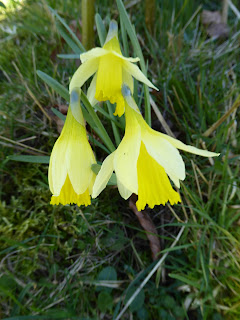
Narcissus at Sizergh Castle NT
Image: L. Farrell
Last time we heard from BSBI President Lynne Farrell, she was looking at mistletoe but as we move towards Spring, what is Lynne looking out for now? 

Read on to find out: 

"During the past few weeks plants and animals have begun to stir as the days lengthen a little, and I now have three clumps of frogspawn in my garden pond. Most of the local colour is from Spring bulbs, some of which are native in parts of Britain and Ireland and others which are neophytes throughout this range.

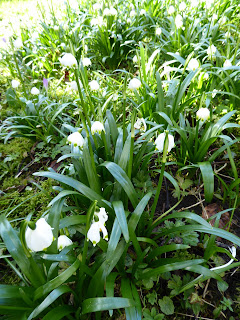
Narcissus pseudonarcissus (daffodil) is considered to be native in England and Wales and an alien in Ireland and Scotland, while Leucojum vernum (Spring Snowflake) is a neophyte, being introduced into gardens from where it has spread into the wild with the first wild record being in 1866. Two sites in SW England were thought to be native.

Spring Snowflake at
Sizergh Castle NT
Image: L. Farrell
Daffodils, of which we have several species and hybrids, are essentially all neophytes (apart from N. pseudonarcissus much beloved by Wordsworth), including the Tenby Daffodil, N. obvallaris introduced and now naturalised in South Wales. It was St David’s Day on 1st March so were they in bloom then? 

Daffodils are also collectors' items, rather like Snowdrops, but I do not know the equivalent name for Galanthophlies. Perhaps someone can inform me?

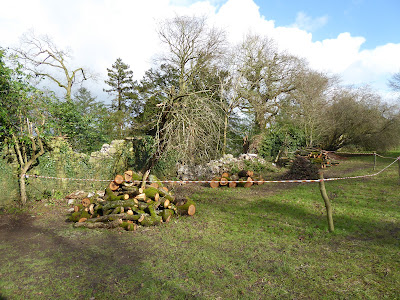
Spring tidying up (image below) is also in progress after the various storms we have experienced. Fallen trees are being felled, cut up and transported locally for firewood, but many are being left in place in coppices and more inaccessible places to provide wild life habitats in the future.

Several large trees blown down near where I live by storm Arwen, crashed in to the walled garden and damaged several old fruit trees. Work continues to ‘tidy them up’, so that safe access can be gained to the allotments. This will take some time throughout the country and no doubt the recovery will be compared to the Great Storm of 1987.


Monday, 28 February 2022

British & Irish Botany: issue 4.1 published

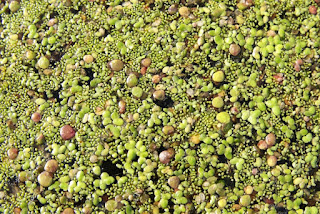
Wolffia columbiana in the Gwent Levels
with Lemna gibba, L. minor, L. minuta
 and Spirodela polyrgiza.
Image: R. V. Lansdown 
The latest issue of British & Irish Botany, BSBI's open access, online scientific journal has just been published and there is a distinct watery theme.

National aquatics expert Richard Lansdown, author of BSBI Handbook #11 on Water-starworts, has collaborated with colleagues to produce a paper on two duckweeds new to Britain. Wolffia columbiana was found last year in ditches in the Pevensey Levels in Sussex and later in grazing marsh complexes in Somerset, Kent and on the Gwent Levels, where Wolffia globosa was also discovered. The genus Wolffia famously includes the world's smallest flowering plant so it's perhaps not surprising that these duckweeds aren't the easiest plants to spot.

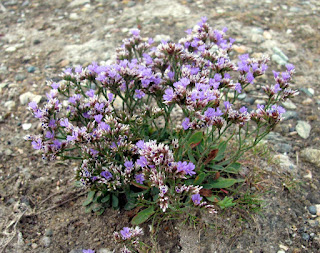
Limonium recurvum subsp. crigyllensis
on Anglesey: Ivor's paper unpicks
the taxonomic history of some members of
this group of sea-lavenders. 
Image: E.I.S. Rees
We head to the Welsh and Scottish coasts for the next two papers: firstly, Ivor Rees describes a new and distinct subspecies within the Rock Sea-lavender Limonium binervosum aggregate from an Anglesey saltmarsh. This taxon has been known since 2006 but has only now received formal taxonomic recognition. Staying by the coast, Mike Wilcox considers Sea Couch and coastal hybrid couch grasses in Scotland. 

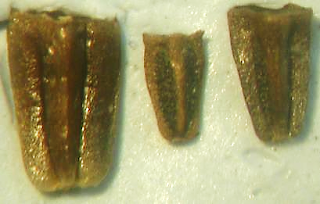
Mike moves inland for his second paper in this issue as he looks at Scentless Mayweed. Mike is well known to News & Views readers because he often reaches out to botanists across Britain and Ireland to ask them to send him plant specimens for closer analysis. If you are one of the many botanists who have responded to Mike's requests, then thank you for your contribution to scientific papers such as the ones in this issue. Please keep up the good work and keep an eye out the next time Mike asks for specimens!

Achenes of three taxa of Triplerospermum:
read Mike's paper to find out how tiny  
differences between these achenes help
identify the species and their hybrids.
Image: M. Wilcox

We also have a paper for the many orchid fans who read British & Irish Botany. David Trudgill has been mining the BSBI Distribution Database to do some analysis on twenty species of orchid recorded in Scotland in recent decades, to answer the question 'are they declining and if so, to what extent'? It turns out the situation isn't as clear-cut as you might have thought... BSBI members can also enjoy a similar paper by David in the latest issue of BSBI News, our membership newsletter. If you aren't already a member, do consider joining us and you'll have online access to every paper ever published in BSBI News, from issue 1 in 1972 right through to the January 2022 issue which contains that paper by David on records of orchids across Britain and Ireland.

For grass aficianados, we also have a paper by Clive Stace on subspecies of Vulpia geniculata. If you are looking at these six papers in this latest issue of British & Irish Botany and thinking, hmm I have some similar observations about a plant in my area, please do consider submitting a draft or just email us for a chat. Editor-in-Chief Ian Denholm and I can soon tell you if it's worth writing your finds up for the journal, or if it would be better to run your draft past John Norton, editor of BSBI News, or there's always the option to publish on this blog. If you have something interesting to say about British and Irish plants, the chances are that your fellow botanists will want to hear about it - it's just a question of choosing the most appropriate place to publish. Don't be shy, drop us a line! And meanwhile, please enjoy the latest issue of British & Irish Botany.

Thursday, 17 February 2022

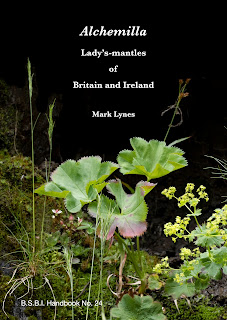
Interview with Mark Lynes, author of BSBI Handbook #24: Alchemilla

There’s a new addition to the series of BSBI Handbooks: we are delighted to announce that Alchemilla: Lady’s-mantles of Britain and Ireland is due to be published in April. BSBI members will be able to benefit from an exclusive introductory offer of £12.50 (excl. P&P) which will save them £7.50 compared the RRP of £20.

I spoke to Mark Lynes, the author of the new Handbook, to find out what made him decide to devote years of his life to the study of Lady’s-mantles. Mark also provided all the images which illustrate this interview.

LM: Mark, before we start talking about the new Handbook, could you tell us a bit more about yourself please, and how you got started as a botanist?

ML: Well, I’m a Chartered Legal Executive by profession, practising as a conveyancing lawyer, for many years based in Doncaster, more recently in Lincoln. I’ve been interested in natural history for as long as I can remember. Whilst still at school, Brian Eversham (now CEO of the Wildlife Trust for Beds., Cambs. & Northants.) and I carried out a detailed botanical survey of a local peat moor, which is still talked about to this day. I was even a member of BSBI back in the day. Subsequently I was ‘lost’ to birding for around two decades, twitching in particular – charging up and down the country chasing rare birds. It was not until the early 2000’s that I finally came to my senses and took up serious botany once more.
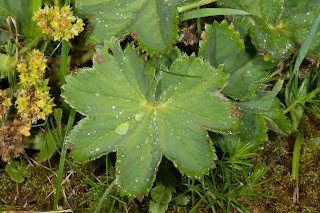
Alchemilla glaucescens

LM: Well I’m glad you saw the light and came back to botany, Mark! But then what drew you to Lady’s-mantles as a genus? Many of us – especially if we are gardeners – will have an idea of what a Lady’s-mantle looks like but may not realise that there are many different species.

ML: Well, the obvious thing for a lapsed (bird) twitcher, is to immediately dive into rare plant twitching! Soon enough I came upon Alchemilla. Seeing that there were only 12 native taxa, I thought ‘well, how hard can it be?’ and was soon up in Teesdale, where I quickly discovered ‘very hard indeed’. This would have been around 2005 and I came home from my day out with a multitude of specimens and photographs, absolutely none of which I could identify. This seemed like a challenge and – as I am nothing if not obstinate – I immediately set about teaching myself to speak Alchemilla.
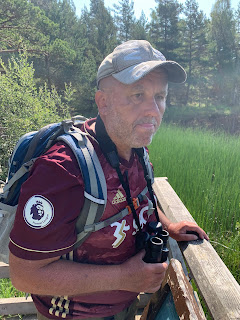
Mark Lynes in 'twitcher'
mode with binoculars
LM: Oh dear, I’m afraid I laughed out loud at that ‘how hard can it be’! We’ve all done it though, started on a new group of plants and then realised the enormity of the challenge ahead – especially challenging if there isn’t a BSBI Handbook to help us along the way. So, what exactly made you decide to take the leap from being an Alchemillaphile to taking on the mantle (see what I did there?) of being a Handbook author? Did you put yourself forward or were you press-ganged by BSBI staffers?

ML: By 2012 I had somehow come to the attention of Kevin Walker, BSBI’s Head of Science, and a meeting was suggested. We met at Doncaster railway station in early 2012, where Kevin was on a brief stopover, changing trains en route back from a school reunion do of some sort. Here, I’m afraid to say my ego rather got the better of me and when Kevin suggested I might like to ‘do the handbook’, I jumped at the chance. The fact he also dangled the prospect of a small financial grant which would enable me to go to Scandinavia to study Alchemilla was a ‘Brucie bonus’ (younger readers might need to Google that saying).
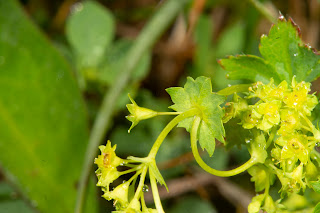
Alchemilla wichurae - close-up of the flowers

LM: Er, you had ‘somehow come to the attention of…’? Our Head of Science is not easily impressed so you must have built up quite a reputation by that point! So, tell me a bit more about the Handbook – I know that it’s around 220 pages long, and covers 20 taxa. How many are native and how many alien?

ML: Yes, the Handbook covers 20 taxa in detail – 15 native and five alien – four of which I recently described. An appendix includes details of a further nine taxa which either might conceivably be found in Britain and/ or Ireland or are otherwise relevant in some way.

LM: And descriptions of those four new taxa were published in British & Irish Botany, BSBI’s in-house scientific journal. The first, Alchemilla sciura, is here, published in 2019, and the other three species, all from northern Britain, are here, published in 2021. When did you start working on the book?
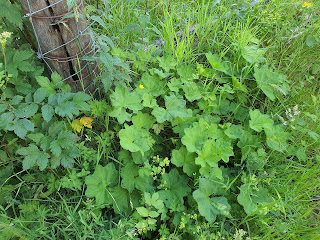
Alchemilla glabra

ML: The work really started with the BSBI-funded visit to Sweden and Norway in June/July 2012, so – and as I say in the book – it has been a long time in gestation. The actual writing process began on the 2nd of January 2016 and for this and the following two winters, I barely left the house. Pressure of work and the desire to remain married meant I could only realistically work at weekends. Summers were taken up with fieldwork, collecting and photographing Alchemilla from across Britain and Scandinavia.

LM: Could you give us an example please of one of the species you cover and what we can expect to find out from the new Handbook about its identification, distribution and current conservation status?
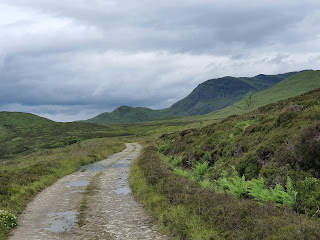
Creag na caillich

ML: Each of the 20 species covered in detail is lavishly illustrated with numerous colour photographs illustrating all of the key features, including leaf teeth and hypanthia, for example. Many species have additional plates devoted to images of individual leaves, illustrating both the variation within the species concerned and identification criteria. Each species account begins with details of the ecology, distribution and conservation status of the species account, most of which were prepared by Kevin Walker. For some species – for example A. sciura – I have been able to update what we know of the distribution of the plant, based on fieldwork conducted as recently as summer 2021. The identification of each species is covered in great detail also, yet is written in a relaxed, and so hopefully accessible, style

LM: You must have visited a lot of locations across Britain and Ireland in the course of your research. Are there any that particularly stand out in your memory?
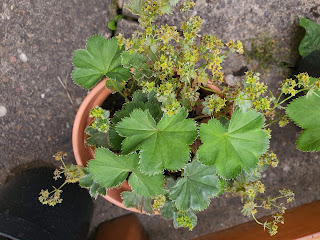
Alchemilla neomanifesta
ML: Well I absolutely love Grass Wood in the Yorkshire Dales. I’m not normally a ‘woody’ person, but there’s just something about the place that makes it very special. I suppose the fact it holds five native species of Alchemilla, including the recently described A. falsadenta, helps. If only there weren’t so many ticks there now. In Scotland, I have a thing about Creag na Caillich in Ben Lawers NNR. It’s somewhere I can imagine finding just about anything Alchemilla-wise – and of course is home to another of my recently described species A. neomanifesta. A visit in the company of Sarah Watts, then of NTS Scotland, will live long in the memory, not least for the fact that we broke a tyre on the NTS 4x4 on the way back to the road. So, if ever you need a tyre changing on a Toyota Hilux, I’m yer man!
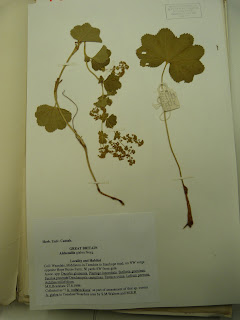
Herbarium sheet of A. glabra
collected by Margaret Bradshaw

LM: Thanks Mark, I’ll let you know if I’m ever in that situation! But as well as field visits, did you visit many herbaria to look at specimens? Are herbarium specimens particularly useful when it comes to Alchemilla identification?

ML: Herbarium specimens are extremely useful in the identification of Alchemilla and the book would have been impossible without access to them. Things which are not apparent in the field, tend to reveal themselves when subjected to a 10x hand lens or similarly low-powered microscope. That said, I physically visited only two herbaria, the one at Cambridge University and one in Umeå University, Sweden. However, I did spend three days solid in the latter, working until midnight on occasion, before going out collecting Alchemilla the same night. For the majority of my specimen research, I relied on material I collected, or which was sent to me by various BSBI members and County Recorders, together with gifts of specimens and some use of herbarium loans.
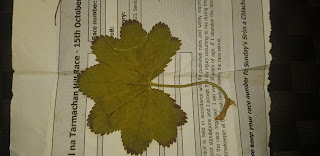
Specimen of A. glomerulans
sent to Mark for determination 

LM: Sounds as though you got a lot of feedback from BSBI County Recorders, our expert referees and many of our “ordinary members” who go out plant recording. Is there anyone in particular whose help you would like to acknowledge?

ML: Over the years I have received innumerable specimens sent to me my BSBI members and County Recorders from across Britain and Ireland, such that they are far too numerous to mention individually. One who does particularly stand out, however, is Paul Smith, the County Recorder for the Outer Hebrides (VC110). I receive a package from Paul most years and always look forward to it as I am seeing material from far-flung locations I have never visited, and in many cases probably never will. One constant throughout work on the Handbook has of course been my fellow Alchemilla referee, Dr Margaret Bradshaw. In the early days – before work on the book commenced or was even mooted - I attended a couple of her Alchemilla workshops held in Teesdale. Until encountering Margaret, I was essentially self-taught in the ways of Alchemilla. Her knowledge of the Alchemilla species of these islands is unrivalled and I have tapped into it on every available opportunity. She’s always been very generous with her knowledge and, more recently with literature and specimens, some going back to the 1940’s. Within the last couple of weeks, I went up to see her at her home in Teesdale and came home with boxes – literally – full of papers and documents. My visit also gave me an excuse to go and see the Red-flanked Bluetail which is wintering along the river near Wynch Bridge (Kevin Walker will be impressed, even if nobody else is…)
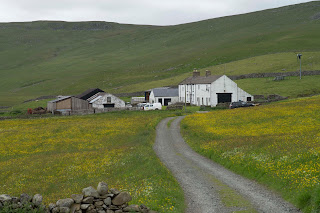
Margaret Bradshaw's stomping ground
 in Teesdale

LM: Hmm once a twitcher, always a twitcher…. But back to the plants! Tell me about the illustrations: they are always an important part of any BSBI Handbook – so, what can we expect here – photographs? Drawings? Diagrams? And are there distribution maps?

ML: Photographs, yes. Lots and lots of photographs, over 200 in all, showing just about every conceivably useful identification feature, or simply being very nice to look at. Whilst photos do much of the heavy lifting, they are ably supported by ‘hair diagrams’ for each species, these illustrating typical maxima and minima hair distribution on the leaves and stem/inflorescence of each species
Mark's Alchemilla collection
LM: Finally: all BSBI Handbook authors benefit from an editor to help them through the process towards publication. Who was your editor?

ML: There are two things which have – finally – made the book happen. The first is my taking early retirement from work, thus finally freeing up the time required to put the thing together. The second and equally important factor, has been my editor, Jeremy Roberts. I’ve known Jeremy for a number of years now and, for me, he was a natural choice as editor. What I did not fully appreciate when I asked him, was just how pivotal he would be to the whole process. Not only has he wrangled my text into something readable, he is also responsible for the aforementioned hair diagrams, together with all the other drawings and diagrams within the book. Without Jeremy’s input, the book would not have been anywhere near as good as it hopefully is. I owe him a huge vote of thanks.
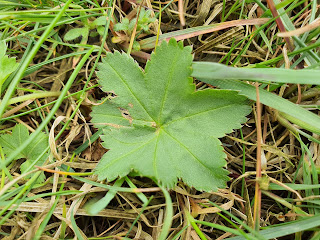
A. glomerulans

LM: Well said, three cheers for Jeremy! Thanks for talking to us about the new Handbook Mark, the 24th in BSBI’s series of Handbooks for difficult plant groups. Alchemilla: Lady’s-mantles of Britain and Ireland has been a long time coming but it looks as though it will be well worth the wait – many thanks to you and Jeremy for all your hard work and thank you for talking to me today. Before you go, may I issue an invitation to you please? Might you think of leading an Alchemilla workshop at some point, so we can all road-test the new Handbook?

ML:  Yes, I am hoping to organise an Alchemilla workshop at some point once the book is out of the way, although it may be next year now, so watch this space!
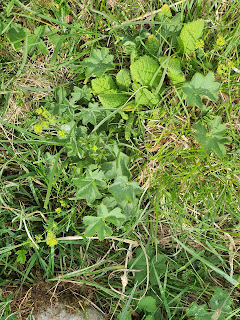
A. filicaulis var. vestita 

LM: Thanks Mark! Now, readers will want to know how to get hold of a copy of the new Handbook.

If you are a BSBI member, there is a flyer tucked inside the January issue of BSBI News which you should have received by now. It explains how BSBI members can benefit from our exclusive offer and save £7.50 compared to the RRP of £20. You can either order your copy by post before the end of March or else you can pay by PayPal – just click here to land on the members-only area of the BSBI website (you'll need to have your password to hand – email me if you’ve forgotten it – and don’t forget to include your membership number).

If you are not a BSBI member, you have two options: you will be able to buy the book from Summerfield Books and other natural history book-sellers later this spring. Or why not join BSBI and enjoy all the benefits of membership, including this special offer? It has never been quicker and easier to become a BSBI member and start getting involved

Wednesday, 16 February 2022

Mistletoe searches and a bright spark: February report from BSBI President Lynne Farrell

Mistletoe in Arnside
Image: L. Farrell
Last month BSBI President Lynne Farrell told us about her New Year Plant Hunt and was looking forward to reading the analysis of this year's results - she won't have much longer to wait because the report is almost ready for publication

So, what has Lynne been up to in the meantime? Over to her for her February report:

"It has been dull and overcast here in Cumbria, with the occasional ray of sunshine breaking through and strong winds re-occurring, so still unsettled conditions in many ways.

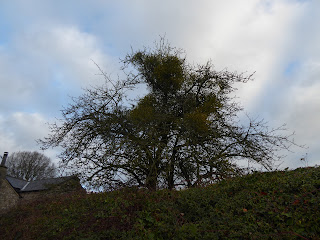
"At this time of year I feel restless and want to get out recording and searching for plants to brighten up my day. So having previously conducted surveys of Mistletoe Viscum album when living in Cambs., I’ve now turned my attention to Cumbs. There are very few recent records for the latter but the starting point was gathering information from the Flora of Cumbria and the BSBI Distribution Database, then contacting  local botanists. 

Mistletoe in Heversham
Image: L. Farrell

"The past month has seen me patrolling nearby villages, especially around Heversham, near Kendal, with my binoculars, camera, notebook and GPS. Quite a few people came out when they saw me wandering around and peering through my binoculars asking ‘Can we help you? The answer was ‘Yes, of course’. So now I have a distribution map of Mistletoe in the village and also a selection of locals ready to spot further plants. Mistletoe is an iconic species and one which attracts attention and interest.

"This is a particularly good time to search for it before the leaves appear on the trees. It is remarkable how difficult it is to see later on as it becomes hidden in the mass of greens. Jonathan Briggs has recently updated his previous work on Mistletoe and his paper can be found in the latest issue of British and Irish Botany

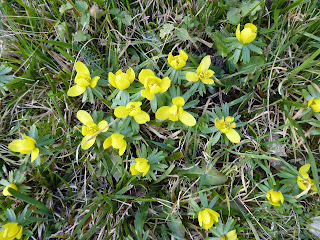
Winter Aconites
Image: L. Farrell
"Up here I have found it in old Apple orchards, in gardens on Crab apple and apple, on Limes in the churchyard and nearby Levens Hall, and on Hawthorn in old hedgerows, with just one sighting on a Silver Birch. I counted female and male spheres and also noted that they were many small plants, which indicates a healthy population. Locals also informed that it is spreading in Heversham.

"Although the orchards may be disappearing from some parts, they still exist in this area. The results of my survey have been sent to the BSBI County Recorder and he has now asked Cumbrian botanists to go out and search for it their areas. Perhaps you can also contribute where you live?

"One bright, welcome sight was a clump of Winter Aconite Eranthis hyemalis on a roadside bank. It's a neophyte, introduced into gardens around 1596, and first recorded in the wild in 1838. It is certainly amongst the first plants to flower in the year."

Thursday, 13 January 2022

Changing times: January report from BSBI President Lynne Farrell

Happy New Year to you all and I hope that you were able to participate in the New Year Plant Hunt, which ran from 1st to 4th January this year, and is becoming increasingly popular. I am actually thinking that it might be good to do Spring, Summer and Autumn Hunts in the same monad (1km x 1km grid square) so that I can compare the phenology throughout these changing times. 

Although we have seen increased numbers of taxa in flower at New Year for the past two seasons, this year there has been a decrease, at least up here in Cumbria. Storm Arwen, cold and wet conditions in November and December are probably the causes of this, but we will wait for the overall analysis to come out later this month and then we can compare with analyses from previous years.

As an example, last year we recorded 43 species around Arnside but only 16 this year. The normally productive sea front had been well and truly blasted by Arwen, except for Spartina which withstood the winds, and - although it is a fungus and so I did not add to the list of plants - the poisonous Ergot was evident on the grass. However, we did find a few species in sheltered spots including the sweetly-scented Winter Heliotrope Petasites fragrans (image above right). Goldfinches sought refuge in my garden and were feeding on the seed heads, which I had left deliberately for them (image below left). 

There have been many changes and challenges in the past year and, of course, things will continue to change, so we will continue to learn and evolve. Opportunities will be presented and let us try to accept them and move forward again. Sometimes it feels like we are in the ‘murk’ but there is always the chance to emerge from this into the clearer light. 

Recently many of you will have experienced the weather inversions, which provided spectacular views of ‘floating hillsides’ across many parts of Britain and Ireland. Here are a couple of images (below) from Arnside Knott from where you can usually see the sea, but in late December it was totally covered in mist and only the higher ground could be seen rising above. 


Tuesday, 4 January 2022

New Year Plant Hunt 2022: Day Four

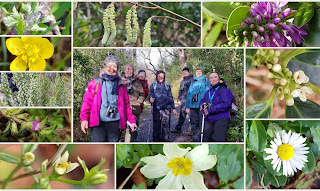
Glengarriff plant hunters and
some of their finds.
Image: C. Heardman
So, after four days, hunts across Britain and Ireland, and some surprising finds yesterday and on Sunday, the 2022 New Year Plant Hunt draws to a close. It's been great fun but our hard-working volunteers are probably heaving a sigh of relief tonight! Before they all return to their "normal lives", one of them, Hannah Udall, has pulled together a summary of the final day for you.   

Hannah is an Ecology and Environmental Science Undergraduate at the University of Edinburgh and aims to research soil carbon storage in the future. When she is not studying, she loves exploring outdoors, bird-watching and looking for wildflowers and fungi.

Over to Hannah for this evening's blogpost:

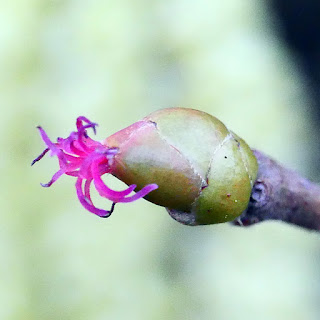
Female flowers on Hazel
Image: R. Horton 
"Today was the final day of the New Year Plant Hunt, and plant-hunters were greeted with snow speckled woodlands and intermittent rain. However, the cold weather did not prevent people from going on hunts and making some great observations.

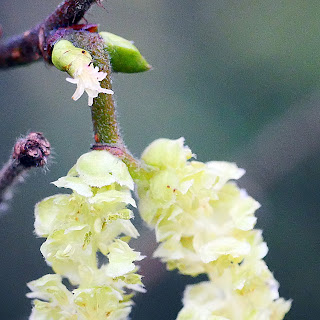
"A common find was the male catkins and the beautiful pink female flowers on hazel trees. A white variety of female hazel flowers was also found in Cambridge by Roger Horton (it had been spotted in previous years by Sabine Eckert).

In northern Ireland, Donna Rainey found ragged-robin Silene flos-cuculi which is always pleasant to witness following its decline in recent years - formerly a fairly common plant, it is now classed as Near Threatened on the England Red List

White hazel catkins
Image: R. Horton
Some plant-hunters enjoyed other facets of nature during their plant hunt. Aaron Martin looked for otter signs along the Water of Leith, Edinburgh, and in Hampshire, Tristan Norton took a bird survey on his plant hunt. Aaron found feverfew Tanacetum parthenium and red campion Silene dioica along the water of Leith and Tristan Norton found field woundwort Stachys arvensis in Lee-on-the-Solent - this is a new record for the site.

A group of botanists from the Glengarriff Nature Reserve in Co. Cork found 36 species yesterday, completing their hunt before the snow and rain we witnessed today! Many of today’s hunts were completed by solo or paired botanists, however a lot of group expeditions have taken place over the course of the hunt. 

It was a cold day today and our plant-hunters fortified themselves with hot drinks. Two botanists were accompanied by canine friends on their hunt: Polly Spencer-Vellacott found six flowering species in Aberfeldy, Perthshire, with the help of her dog Conker the Spaniel and in Kerry, Jessica Hamilton had the company of her two botany dogs!

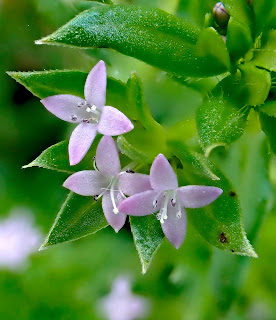
Field Madder
Image: S. Harrap

Norfolk Flora Group with their impressive 93 species (including field madder and scentless mayweed) found when they ventured over the border into Suffolk, were ousted from their place at the top of the List of Longest Lists today by David, who found 107 species, including wild strawberry and sun spurge, in Swanage. A list came in today from Simon Leach, who went on a hunt in Taunton and managed to find 88 species, taking the spot of fifth longest list. Another impressive list came through today from the ‘Limerick Sisters’ with a total of 61 species. But there are more lists still coming in so who knows what might happen?

As of this evening, it looks as though 848 taxa have been found in bloom this year (subject to verification by our botanist team) which is a record high compared to the last five years, perhaps reflecting the mild weather we have had recently. Daisy Bellis perennis is still the most common plant observed which is akin to previous years, with dandelion Taraxacum officinale agg. and groundsel Senecio vulgaris following closely behind. White dead-nettle Lamium album was more commonly observed this year in comparison to previous years, superseding species such as shepherd's-purse Capsella bursa-pastoris and common chickweed Stellaria media by over 100 observations. In previous years shepherd’s purse and common chickweed have been more common, with the number of observations being more comparable across the species.

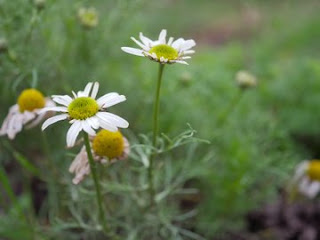
Scentless mayweed
Image: D. Steere

These observations are going to be verified by our botanists over the following days, so the results are not finalised yet. Thank you to everyone who took part in this year’s Plant Hunt. We have been sent some wonderful finds, and we hope you had an enjoyable hunt.

A reminder to all Plant-hunters that even though the plant hunt is over, submissions are still accepted until midnight on Sunday 9th January. If you have some pictures but haven’t had the chance to submit them yet we would love to see them! Just email them to us at nyplanthunt@bsbi.org

Again, thank you for taking part in the New Year Plant Hunt 2022 and we wish you all the best for the New Year".

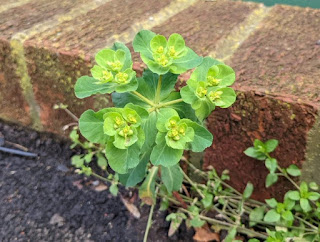
Sun spurge
Image: J. Common

Huge thanks to Hannah for this blogpost and to her and all the volunteers for all their help over the past four days: April, Brian, Hannah, Holly, Jo, Laurel, Moira, Paul and Rebecca, have been working behind the scenes processing records, answering enquiries, identifying plants and promoting the Hunt on social media - you are absolute stars. 

Thanks also to two staff members, Fundraising Manager Sarah, who joined BSBI in March so this was her first experience of the Plant Hunt (a bit of a baptism of fire eh Sarah?!) and Database Officer Tom, who created the new recording app and has been ironing out any remaining glitches over the past few days - wonderful work as always Tom! 

And most of all, thanks to all of you who have gone out hunting and submitted (so far) 1,074 surveys comprising 16,713 individual records. Well done!

We start analysing the data next week and plan to publish our analysis and put out a press pack on 24th January - watch this space!

Monday, 3 January 2022

New Year Plant Hunt 2022: Day Three

The third day of the 2022 New Year Plant Hunt and the weather is still (generally) being kind to our plant-hunters. 

Almost 1000 people have already taken part in Hunts - compared to last year, more of the 825 surveys submitted were carried out by groups, such as the group pictured on the right, who, led by Ciaran Bruton, went hunting in Merlin Woods, Co. Galway (image by Colin Stanley), although we are still not back to the high proportion of group hunts that we used to enjoy in pre-Covid days.

The tally of species seen in bloom currently stands at 773, an all-time record, beating last year's 714 which itself was an all-time record!

 These figures do still need to be verified and our ID experts are already working their way through the data, rejecting anything we can't be 100% sure of, any plants not strictly in flower etc. 

But with another day of hunting tomorrow, and some recorders still checking their lists before submitting (the deadline is Sunday 9th January), it's looking very likely that this will be the highest ever total of wild and naturalised plants blooming at New Year.

So, with more than 13,000 records submitted so far, what exactly are our hunters finding and are there any themes emerging yet?

There were some very attractive and uncommon finds: Paul Green spotted Round-leaved wintergreen under pines near dunes in Co. Wexford (image above left) and Katherine White saw Harebell in bloom (image on right) in Shropshire; once common across England, Harebell is now classed as Near Threatened on the England Red List. 

As in previous years, southern locations and both coastal and urban habitats are proving species-rich, with the longest lists coming from Suffolk, Bath, Cornwall, Jersey... 

Sites supporting arable plants (archaeophytes, and sometimes disparagingly called 'arable weeds') are also yielding good lists, e.g. Simon Harrap's group who recorded 63 species in Norfolk including Dwarf Spurge (image below left, taken by Simon), Common Fumitory and Cornfield Knotgrass. Cornflower was recorded in South Lincs. as was Corn Marigold which appeared on several lists.

Several journalists have contacted us in recent days asking if any of the New Year Plant Hunt results suggest that spring is coming early, or if they provide evidence of climate change.

Well, spring doesn't seem to be arriving early - while there are a few records of primrose and lesser celandine, and the oddities we've mentioned in recent days, such as Hawthorn blooming in West Dulwich, or Bulbous Buttercup flowering in Dorset, the majority of species recorded seem to be, as in previous years, either all-year-rounders or else the 'autumn stragglers' that have kept on flowering in the absence of hard frosts. 

Some of those 'stragglers' are surprising, such as the naturalised Red-hot poker recorded and photographed in Kent by Dave Steere (image below right) - this garden plant is usually associated with late summer. 

Not all the spring flowering plants blooming early are necessarily welcome. The three-cornered leek recorded and photographed by James Faulconbridge on the Isles of Scilly (image below left) can prove very invasive and outcompete our more traditional spring flowers such as violets and cowslips. Its seeds are attractive to ants who help to disperse the plants. Introduced into cultivation in Britain and Ireland on 1759, it was first recorded "in the wild" in 1849.

These days, it is actually an offence under Schedule 9 of the Wildlife and Countryside Act to plant three-cornered leek, or otherwise cause it to grow, in the wild. The BSBI Code of Conduct, which you can download free of charge here, lists all the plants covered by this legislation.

Narrow-leaved ragwort, recorded and photographed in bloom in Norfolk by Alex Prendergast (image at the foot of this page), does seem to be linked to a changing climate. 

Our records show that this plant, which originates from south Africa and was first recorded 'in the wild' in 1836, has been on the increase in recent years and seems to be moving northwards. 

Water bent, which is showing up in multiple lists this year (as it did during last year's New Year Plant Hunt) is another recent arrival which is increasing and spreading northwards. 

Our team of volunteers on the Support Desk are sorting through the data and are on the look-out for any other recent arrivals showing signs of increasing, spreading northwards and confounding expectations by managing to bloom in midwinter. 

They will be here again tomorrow, waiting to receive and process your records so if you haven't done a Hunt yet - or even if you have - we hope you'll get out there and take part in the final day of this year's Hunt. Then once the data are all in, we'll start the really hard-core analysis. Watch this space!