Tuesday, 8 October 2019

State of Nature in Northern Ireland

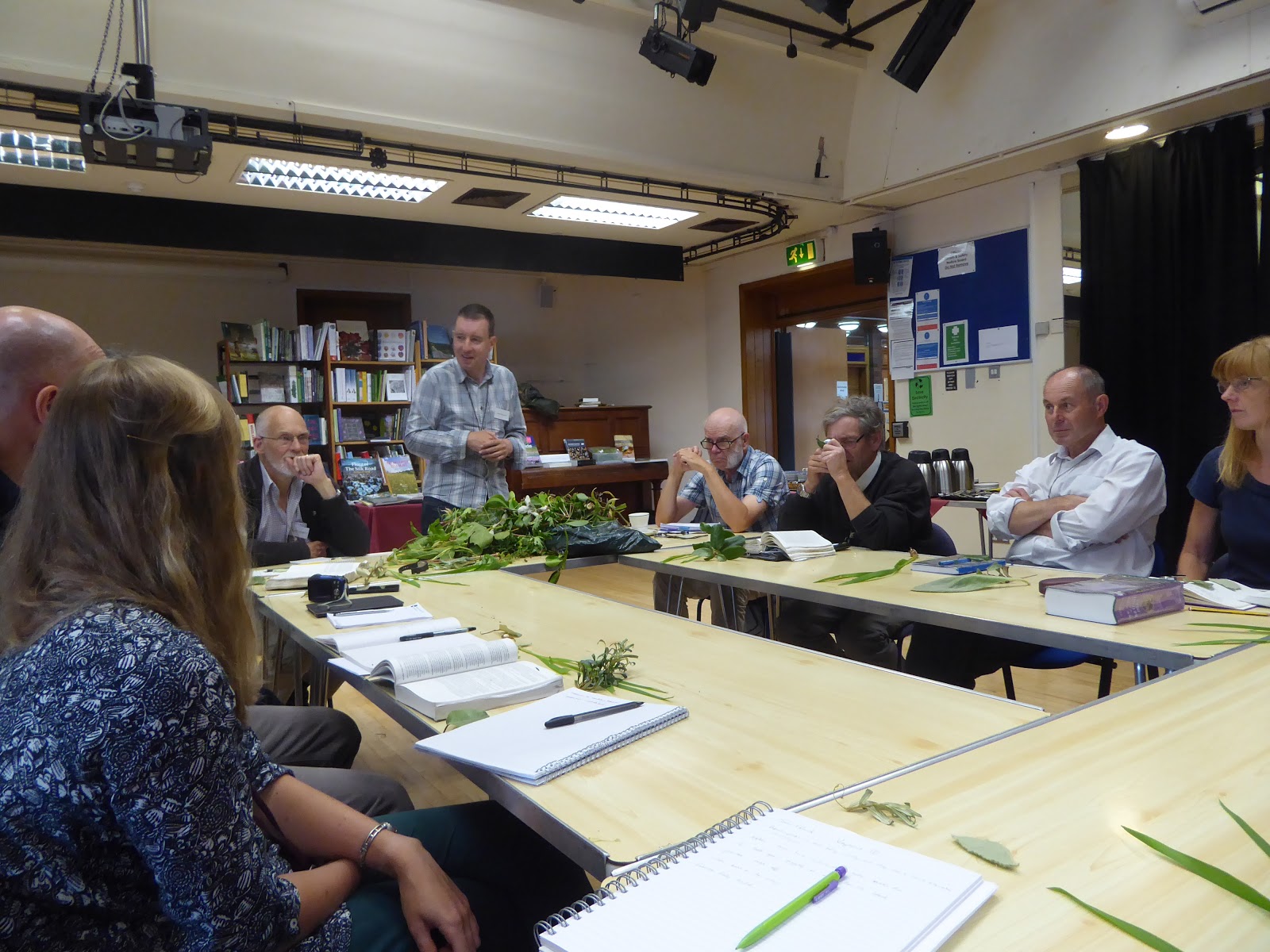
BSBI members & volunteers sort
through plants drawn from Lough Neagh
September 2019
Image: J. Faulkner 
Last week, the 2019 State of Nature report was published; BSBI Head of Science Dr Kevin Walker reported on how BSBI data, collected by our 3000+ volunteer members, underpinned the report.

The State of Nature partnership, of which BSBI is proud to be a member, also published summaries for the four countries which make up the UK, and we shared these summaries across the country pages of the BSBI website.

Below, John Faulkner, BSBI County Recorder for Co. Armagh and BSBI President 2015-2017, shares his thoughts on the state of nature in Northern Ireland

“There has been no let-up in the net loss of nature, according to the UK State of Nature report 2019. This is just as true of Northern Ireland as of the rest of the UK.

Casting a grapnel to collect aquatic plants
Image: J. Faulkner
“The Northern Ireland summary highlights our internationally important habitats and some of the pressures they face.  It also highlights pressures on species. Of over 2000 species assessed, 11% are threatened with extinction from Ireland (both north and south). About half of these species are plants, which are fundamental to all wildlife.

Lough Neagh is singled out in the report as by far the largest body of freshwater in the UK, and recent work by BSBI members illustrates the fate of plant life there. The flora of the Lough has undergone massive changes. Of all the aquatic plant species recorded as occurring in the Lough up to the year 2000, only 50% have been refound since then. The aquatic vegetation of the Lough is now dominated by a small number of species that thrive on very high nutrient levels. Plant diversity has plummeted.

Pollution by high nutrient levels – whether in water, soils or the atmosphere – is now believed to be the biggest single cause of the decline of plant species in Northern Ireland, but other factors such as habitat loss and changes in the management of marginal farmland also play a part”.

Learning about hybrid pondweeds with
expert Chris Preston as part of
Ireland's Aquatic Plant Project
Image: R. Northridge
This is obviously not pleasant reading but many thanks to John for drawing our attention to these serious declines and the reasons behind them. Thanks also to BSBI aquatics expert Nick Stewart who provided some of the stats mentioned above.

If you are concerned about our declining wild flowers and wondering what you can do to help, may we suggest that you consider contacting your BSBI County Recorder who has oversight of the wild plants in your area. Contact details are here and you don’t need to be a BSBI member to start getting involved

We can’t even begin to conserve what we don’t know about so helping to record and monitor the plants in your area, and sharing what you find out, are important steps towards preventing further declines.

Thursday, 3 October 2019

State of Nature: BSBI Head of Science explains how BSBI plant records were used.

The 2019 State of Nature report has just been published and BSBI is proud to once again be a contributor, although the report makes sobering reading. There is no big launch this year (we were at the 2013 launch and also at the 2016 launch, both with Sir David Attenborough) but there will be lots online and hopefully in the media tomorrow morning.

I asked Dr Kevin Walker, BSBI's Head of Science, to tell us about the role played in the State of Nature report by BSBI data. Kevin has also been through the report, which you can download here, and below he flags up the plant-related news stories, both good and bad. 

Kidney vetch on a BIFFA butterfly bank
Image: Patrick Cashman, RSPB
Over to Kevin:
  
"Britain’s wildlife is arguably the best monitored in the world thanks to the millions of hours invested by a national army of volunteer recorders. State of Nature 2019 utilises this unique resource to provide the most complete picture of the state of Britain’s wildlife ever assembled; and the results are alarming. 

Whilst there are some ‘good news’ stories up to half of species in some groups are in serious trouble. 

Pasqueflower
Image: Kevin Walker
"Trends for over 1440 plants were included in the report all based on BSBI distribution records with analyses carried out by Centre for Ecology and Hydrology. The results provide some strong messages; wildflower meadows continue to decline in extent and quality, along with their associated fauna (page 15); atmospheric pollution and eutrophication is clearly impacting species of infertile conditions (page 40) and our woodlands are suffering from the effects of diseases such as Ash Die-back (pages 43-45). 

"Pasqueflower features prominently in the report but what is not mentioned is the main reason for its decline – lack of management which is now widely recognised as a threat to many species.

Lady's-slipper orchid
Image: Steve Knell, RSPB
"However, there is hope – thanks to the work of the organisations (including BSBI) that form the SoN partnership, we have an unrivalled understanding of why our wildlife is in trouble; the litany of causes includes habitat loss, modern farming methods, pollution, persecution and increasingly climate change. 

"But we also have the knowledge, technologies and increasingly public will to put things right. One example given in the report is the recovery of Lady’s-slipper Orchid from a single plant to hundreds now re-established in former sites following years of painstaking ex situ breeding and careful re-introduction.

"Plants provide the bedrock of a healthy ecosystem and it is clear from the results that their declines are exacerbating more marked declines in groups that rely on them, notably insects, mammals and birds. As the SoN report affirms, we need to start working together as one conservation movement, to make the changes needed for the good of British wildlife and the generations to come".

You can find about more about the State of Nature national report here on the BSBI website, download the full report here and we are posting country summaries across the country pages on the BSBI website. 

You can also follow the #StateofNature hashtag on Twitter.

Wednesday, 2 October 2019

Best time to join BSBI?

Promoting BSBI at Ireland's first ever
National Biodiversity Conference
Image: C. Heardman
If you appreciate value for money then October really is the best month of the year for you to join BSBI! So if you've been mulling over the pros and cons, and trying to decide whether BSBI membership is right for you, please read on to find out about this month's special offer and all the benefits you can expect to enjoy once you've joined. 

The first bit of good news is that BSBI membership is currently still £30 per year (38 euros if you are based in the Republic of Ireland) - we haven't raised the subscription rate since January 2015. 


If you're under 21, or in full-time education and under 25, you can benefit from our heavily-subsidised student rate of just £12 (15 euros): we want to give our next generation botanists as big a helping hand as possible!

The next bit of good news is that if you join today (or any time for the rest of this year), once you've paid your annual subscription for 2020, your membership starts at once! So you could enjoy 15 months of benefits, starting today, for the cost of 12 months. You wouldn't need to pay again until January 2021.

Now about those benefits: firstly, if you're a book-lover, BSBI membership opens the door to some great ways to save money on botany books. You'll have noticed in recent days that we've been flagging the special offers on three major new botany books. 

Until the end of November 2019, BSBI members can benefit from exclusive members-only offers and save £10 on the RRP of Grassland plants of the British & Irish lowlands and a further £5 on the RRP of Gentians of Britain & Ireland. They can also save at least another £5.50 (that special offer price excludes P&P) if they order a copy of Poland & Clement's Vegetative Key to the British Flora 2nd edition, although you don't need to be a BSBI member to benefit from that special offer. (You're too generous, John Poland!).

And any BSBI member entering the BSBI members-only area of the Summerfield Books website will find special offers on no less than 51 titles this month! So if you're a fan of buying botany books, you can quickly recoup the cost of your BSBI membership next time you do some book-shopping.        

Apart from great savings on books, another perk of BSBI membership is that you get three print copies each year of BSBI News, our very popular membership newsletter. Here's a taster of what was in the September 2019 issue


You also get access to all the scientific papers published in New Journal of Botany, our scientific journal which ran from 2011 to the end of 2017. We've made its replacement,  British & Irish Botany, available free of charge to everyone so you don't need to be a BSBI member to view or download papers published there.

But you definitely need to be a BSBI member if you want access to our network of 100+ expert plant referees who can advise you on the identification of the trickiest of plants. Two of those referees deal only with enquiries from beginners, so whatever your skill level, you will benefit from access to the referees, who include some of the top specialist botanists in Britain & Ireland. 

We never share contact details of those referees with non-members - very occasionally we may name one or two in public, with their permission, but that's all! - but once you have joined you will receive a print copy of the BSBI Yearbook with full contact details for all of them and guidance on how to send any of them live or pressed plant material or photographs.


Selection of BSBI
publications available
from Summerfield Books
Image: P. O'Hara 
You will also have access to the password-protected members-only area of the BSBI website, where you will find resources such as: 
  • electronic versions of BSBI News going back for the past five years; 
  • an index to back issues of BSBI News so you can easily find articles published on any given plant species or other botanical subject; 
  • an electronic version of the BSBI Yearbook so it's even easier for you to get hold of referees and County Recorders
  • the BSBI membership list so you can find fellow members in your area (if they have agreed to share those details); 
  • a link through to the password-protected BSBI Governance website so you can see the deliberations of BSBI's Council and all its committees
  • you'll be offered ways to take part in BSBI consultations and reviews on next steps within the society; 
  • and of course you will be eligible to vote in our Annual General Meeting
BSBI is a society led by its members, for its members!

As a member, you'll benefit from special offers on publications and events - we give you advance notice of forthcoming BSBI events, conferences and meetings (most are open to all but some are members-only, or members have priority booking). 

Learn more about botany with a BSBI training grant
Image L. Marsh
If you're planning to apply for a BSBI training grant (they open on 1st January each year and you can apply for up to £250 towards a botanical training course) - you don't have to be a BSBI member but "members are favoured if there is competition for grants". And I've never known a year when there wasn't competition for grants! 

Finally, you'll have the option of applying for some of the great volunteering opportunities we offer - most of them are only available to BSBI members.

So, you get great reading material, access to the country's top botanists for ID help and advice, you get to shape the society's future and you get to save money on botany books. You also have the pleasure of supporting BSBI's important work and helping us further our aims

Join BSBI to see great plants in great company!
Image: L. Marsh
And if you join online in October, you will be paying just £2 per month for all those benefits until the end of 2020! 

Head over to our membership subscription page to see the various ways to pay and what you can expect to find in your membership welcome pack. We look forward to welcoming you as a fellow BSBI member!

PS If you're already a BSBI member, why not forward a link to this blogpost to any friend(s) or colleague(s) who you think might enjoy becoming a member? 

Monday, 30 September 2019

BSBI's book-sellers, Summerfield Books: interview with owner Paul O'Hara

A small selection of Summerfield Books' stock
Image: P. O'Hara
If you buy books on botany, or any other branch of natural history, you’ll know about Summerfield Books, the independent family-run book-sellers for new, rare and out-of-print books from around the world on botany, forestry, arboriculture and natural history. But did you know about the special relationship between Summerfield Books and BSBI? 

I caught up with owner Paul O’Hara to find out more: 

The Old Coach House
Image: P. O'Hara
LM: So Paul, can you start by telling us a bit about Summerfield Books – where are you based and how long have you been going?

POH: Hi Louise. Thanks for inviting me to have a talk with you. We are based just outside Penrith, in Cumbria. The business is currently located in the Old Coach House, one of a number of sandstone buildings in the Leeming Estate. It’s right next to junction 40 on the M6, so handy for people to call by and the setting is very pleasant, it’s surrounded by trees and next to an arboretum. We’ve been running the business since 2007 but it was originally set up in 1985.

LM: And roughly how many natural history titles do you have in stock at the moment? 

Paul (in beige top) enjoys a training workshop at
the 2016 BSBI Recorders' Conference
Image: L Marsh 
POH: Well… on the website we have something like 7000 titles, mostly new books, and as many if not more second hand books, most of which are not on the website. At any one time we would have perhaps 75% of the books that are on the website in stock, with the remaining titles either awaiting delivery or re-order.

LM: That’s a lot of books! There’s so much to browse on your website – and I hear you are in the process of setting up a new website – how will that differ from the current one?

POH: The focus of the new website is very much customer led. So, the site will be more responsive, and easier to navigate – the search function is a lot more sophisticated than the old site. The payment process will be simpler and there will be a lot more choice of books, including second-hand ones. Our old site is pretty much at the limit of what it can handle, whereas the new one can easily take ten times as many titles as we have at the moment. At the back-end it will reduce wo(man) hours spent adding books and producing invoices etc. This will free us up to spend more time amongst other things, communicating with customers and focusing on product development.

Chris O'Hara chats to BSBI President Chris
Metherell in Summerfield's pop-up bookshop
at the BSBI Exhibition Meeting 2018
Image: L. Marsh
LM: BSBI members love being able to log in to the password-protected ‘members-only’ area of the Summerfield Books website to claim exclusive discounts on selected titles. A reminder here that if you can’t remember the password, just email me and tell me your membership number and I’ll send you your password by return.

But I wonder if non-members realise that as well as BSBI Handbooks and other titles published by BSBI such as Threatened Plants in Britain and Ireland and The Discovery of the Native Flora of Britain & Ireland, Summerfield Books also offers discounts on titles such as Rose & O’Reilly’s The Wild Flower Key (2006). There are even books about garden plants and non-vascular plants, such as the European Garden Flora and Mosses and Liverworts of Britain & Ireland. Can you give us any clues about other books on which you might soon be offering discounts?

BSBI publications and
other botany books
Image: P. O'Hara
POH: We add books that we feel are useful for BSBI members, especially new members, and which we can afford to offer a bit more discount on. On the new site there will be more entries as it will be a more facile process than it is at the moment, currently every title in the member’s area has to be duplicated from the main area. 

As to what will be in the member’s section of the new site – well, members will have to login to see! 

LM: Hmm, I see you are going to keep us in suspense! Every botanist I know really enjoys receiving the catalogues you send out – what’s the best way for people to get on to your mailing list so they can keep us with the latest news from Summerfield Books?

POH: It’s very simple to sign up on the website or you can just send us an e-mail or telephone.

LM: And of course people can follow you on Twitter…


John Poland browses Summerfield
Books' shelves at the 2016
Recorders Conference
Image: L. Marsh
LM: But of course it’s not just about the books. You have a wonderful selection of hand-lenses at different magnifications, with and without lights, with graticules… ranging from a basic £4 x10 lens to a swanky scale loupe with a graticule – pricey but once you’ve tried it, you’ll understand why it’s recommended by John Poland of Vegetative Key fame! Anything new in this section that you’d like to tell us about?

POH:  We’ve been selling lenses that can be added to your smart phone – called BLIPS. They are produced by SmartMicroOptics Srl which sprang up as a product based on research undertaken by the Italian Institute of Technology. They are very simple to use, modestly priced and fun to play with. We also have a loupe and graticule (KIMAG 10) with a LED  built in  – John Poland is also very impressed with it! 

Now is a good time to buy as prices on lenses (most are produced outside the UK) and global supply problems are pushing up prices. We are currently holding prices, but we will have to increase them soon.

A small selection of the hand-lenses
stocked by Summerfield Books -
seen at the 2018 BSBI Exhibition Meeting
Image: L. Marsh
LM: Ooh we’d better get our skates on! I’ve just noticed that there’s even a plant press for drying herbarium specimens!

POH: We’ve been introducing a few new products that botanists especially might need and if there are other products that people would like, then we would encourage them to let us know what would be useful to them. We’ve also been promoting a few locally made products such as bird/squirrel boxes and feeders. Again we are open to suggestions for products that customers would like to see on the site.

LM: The Summerfield Books pop-up shop has become a real feature of BSBI national events. The Scottish Botanists’ Conference, the Recorders’ Conference and the Annual Exhibition Meeting just wouldn’t be the same without you!  So we can look forward to seeing you at RBG Edinburgh on 2nd November for the Scottish Botanists’ Conference and again at the Natural History Museum on 23rd November for the Exhibition Meeting?

Summerfield's pop-up bookshop at the
2018 Recorders' Conference
Image: C. Dwyer
POH: Yes we’ll be there!

LM: Great, I’ll bring my ‘Wants’ list along and get ready to browse your new titles and try out your new hand-lenses! Thanks for talking to us Paul.

If you haven't yet joined BSBI, you won’t be able to benefit from access to Summerfield’s BSBI members-only area, so why not check out this page? It lists all the benefits of BSBI membership and there's a secure payment option, making it very quick and easy for you to become a BSBI member and start getting involved

October really is the ideal month in which to join BSBI if you haven't already! There are exclusive special offers on BSBI books, available only to BSBI members, and of course if you join BSBI after 1st October, you get three "free" months and then your subscription starts in January and runs until the end of 2020. More tomorrow (1st October) about all the benefits of BSBI membership!

Sunday, 29 September 2019

Lemon-scented fern

Lemon-scented fern
Image P. Stroh
In a series of blogposts since January 2018, we've looked at all but one of the botanicals selected by Andy Amphlett, BSBI's County Recorder for Banffshire, and Sandy Jamieson, manager at Speyside Distillery, for inclusion in one of the two expressions of Byron's Gin. Our final botanical is lemon-scented fern Oreopteris limbosperma

Lemon-scented fern gets its name from the distinctive lemony smell which comes from yellow glands on the underside of the leaves. If you encounter this fern in the wild, do bruise and sniff a fresh leaf to release the scent! 

This BSBI distribution map shows you where to look for lemon-scented fern. As you'll see, it is very happy in Scotland but absent from many parts of the English east midlands!  

Friday, 27 September 2019

2nd edition Vegetative Key to the British Flora: interview with co-author John Poland

John checks out some limestone pavement,
looking for Dryopteris submontana
Image courtesy of J. Poland
When the first edition of the Vegetative Key to the British Flora was published a decade ago, it quickly became a botanical best-seller, was awarded the BSBI/ Wild Flower Society Presidents’ Award and revolutionised the way we identify plants. 

No longer did botanists have to wait for the few weeks or months of the year when we’d see the flowers and/ or fruits which every other ID book asked us to look at. 

Suddenly we had a much bigger window of opportunity in which to try and identify plants – if there were leaves and/ or stems, we could at least attempt an ID.

John (on right) chairing a meeting of
BSBI's Publications Committee
Image: L. Marsh
 
Authors John Poland and Eric Clement have now produced a second edition of the Vegetative Key to the British Flora and it’s due to be published this autumn. 

I caught up with John Poland (who is also Chair of BSBI’s Publications Committee) to find out more:

LM: So John, ten years on from the first “Veg Key”, as it’s known to its many friends, what made you and Eric decide to do a second edition?

A rare photo of the legendary Eric Clement
(he prefers to stay out of the spotlight!)
with John in the background
Image courtesy of J. Poland 
JP: The original was a good first attempt! But there is always so much more to learn; many diagnostic characters were missed, overlooked or the potential of them wasn’t fully realised until too late. 

This second edition hopes to correct this by evolving a more definitive ID guide based on ten years’ worth of collective (and constructive) criticism from botanists who’ve been using the book. Mind you, there’s always room for improvement! 

But writing the Twig Key gave me a new perspective on key-designing concepts so some of these have been applied to the new Veg Key to make it even easier for users.

John road-tests the
Twig Key at the 2018
Recorders' Conference
Image: L. Marsh
LM: So for anybody who bought the first edition and wonders why they should fork out for a second…

JP: Well, most importantly, every key has been revised to make ID easier and more accurate. We’ve added in more taxa including some hybrids such as the commonly occurring willows Salix spp. that adorn planting schemes everywhere. 

New natives such as the Scarce Tufted-sedge Carex cespitosa found in Hertfordshire have been included - always exciting in the hope that shy-flowering colonies will be found elsewhere. 

Neophytes are hitching a ride all the time and hortal plants jumping over the garden wall! So it’s important we include anything a recorder is likely to encounter.

Also, everyone likes a bargain - this is an inflation-busting book! Since work first started on the Vegetative Key, we’ve almost covered the distance to the moon, using every mode of transport from hovercraft to helicopters, in a quest to critically examine plants. We think it offers good value for money!

Dinner with John and he's still botanising...
Image: L. Marsh
LM: John, you're known for asking botanists visiting the far corners of Britain & Ireland to collect specimens for you, but you and Eric are mainly notorious for spending your holidays not basking on some tropical beach but travelling around Britain and Ireland at your own expense looking at plants yourselves! We’re grateful to you both for your… dedication? obsession? 

In fact John, you can't even visit a restaurant without trying to work out what kind of mint is garnishing your pudding (see pic on right!)

Anyway, what about the nomenclature? The first edition used Stace 2nd ed. (1997) names because it came out just before Stace 3rd ed. (2010) was published.

Kim & Vanessa using the Veg Key
Image: L. Marsh 
JP: We’ve brought scientific names right up to date in line with Stace 4th ed. (2019). English names are largely unchanged although we have rebelled on the odd occasion, preferring Peanut to Ground-nut for example!

LM: Fair enough. Any changes to how the text is set out?

JP: Before, the text followed a set order, which meant that certain crucial characters weren’t easily picked out. In light of experience (and by glancing at the Veg Key copies of users), it has been restructured so the best key character comes first and there is underlining to highlight these helpful characters hidden in the main text. 


John leads a Veg Key workshop at the
2016 Recorders' Conference
Image: R. Mabbutt
We’ve obviously kept with the polychomotous key design as this makes for a speedier key, by setting out all the options.

LM: Oh good ideas, the re-structuring and the underlining. My copy of the first edition is full of underlining and highlighting, as I think you’ve noticed! So lots of reasons for anyone who loved the first edition to invest in a second edition. 

With all these improvements, does the new book weigh much more than its predecessor?

JP: Remarkably, the weight is exactly the same – botanists have enough stuff to carry with them! In the original preface, we talked about a “bigger and better edition”. 

John & friends at Cookham Commons
after BSBI 2012 AGM in Berkshire
Image: L. Marsh
Our kind critics were not happy about the “bigger” bit so we’ve kept the number of pages identical without reducing text size or information. No mean feat but we’ve used space much more efficiently.

LM: Great, so better but not heavier! How about the illustrations? Have you used the same artists and illustrators this time?

JP: The focus has largely been on the text as we wanted to get it as accurate as possible, but Robin Walls kindly provided some more illustrations to fill in gaps and clarify text (particularly with the sedges). 

The colour plates by Colin Smith and Niki Simpson have been updated too. One day, we’d like to produce a fully illustrated version – would anyone care to draw?!

LM: Botanical illustrators – form an orderly queue and send me your details, I’ll pass them on to John! 

There's always a crowd around John's
Veg ID quiz - this one at the 2014
BSBI Exhibition Meeting
Image: L. Marsh
So it sounds as though the “Veg Key 2” is the ideal Christmas present for any keen botanist. But before then we have the BSBI Annual Exhibition Meeting which takes place on 23rd November at the Natural History Museum. 

John, your vegetative ID quiz, and the help table where people can bring along difficult live or pressed specimen for you and other expert botanists to identify, have become firm Exhibition Meeting favouritesWill you be there this time?

JP: Of course! It’s the big winter social event for every botanist, is it not? Always fun to puzzle over obscure plant specimens and you never know what someone might bring.

LM: Great, I suspect your stand will be even busier than usual this time. Thank you for telling us about the second edition of the Vegetative Key to the British Flora – and many thanks to you and Eric for producing it!

John (in background) hunting for
non-flowering rosettes of lizard
orchid (in foreground)
Image courtesy of J. Poland
So at this stage dear readers, you’ll be wondering how you can get your hands on a copy of this amazing new book: there’s a flyer here with details of how to order the book and take advantage of the pre-publication offer. 

Unlike the new BSBI Handbook Gentians of Britain and Ireland and the forthcoming Grassland plants of the British and Irish lowlands which have special offers exclusive to BSBI members, John and Eric are very kindly opening up their special offer to all botanists, whether or not they are BSBI members. 

So if you’d like to order your copy at the special price of £19.50 inclusive of postage (compared to the RRP of £25 excluding postage), just head over to the Veg Key webpage, scroll down and use our secure PayPal facility. 

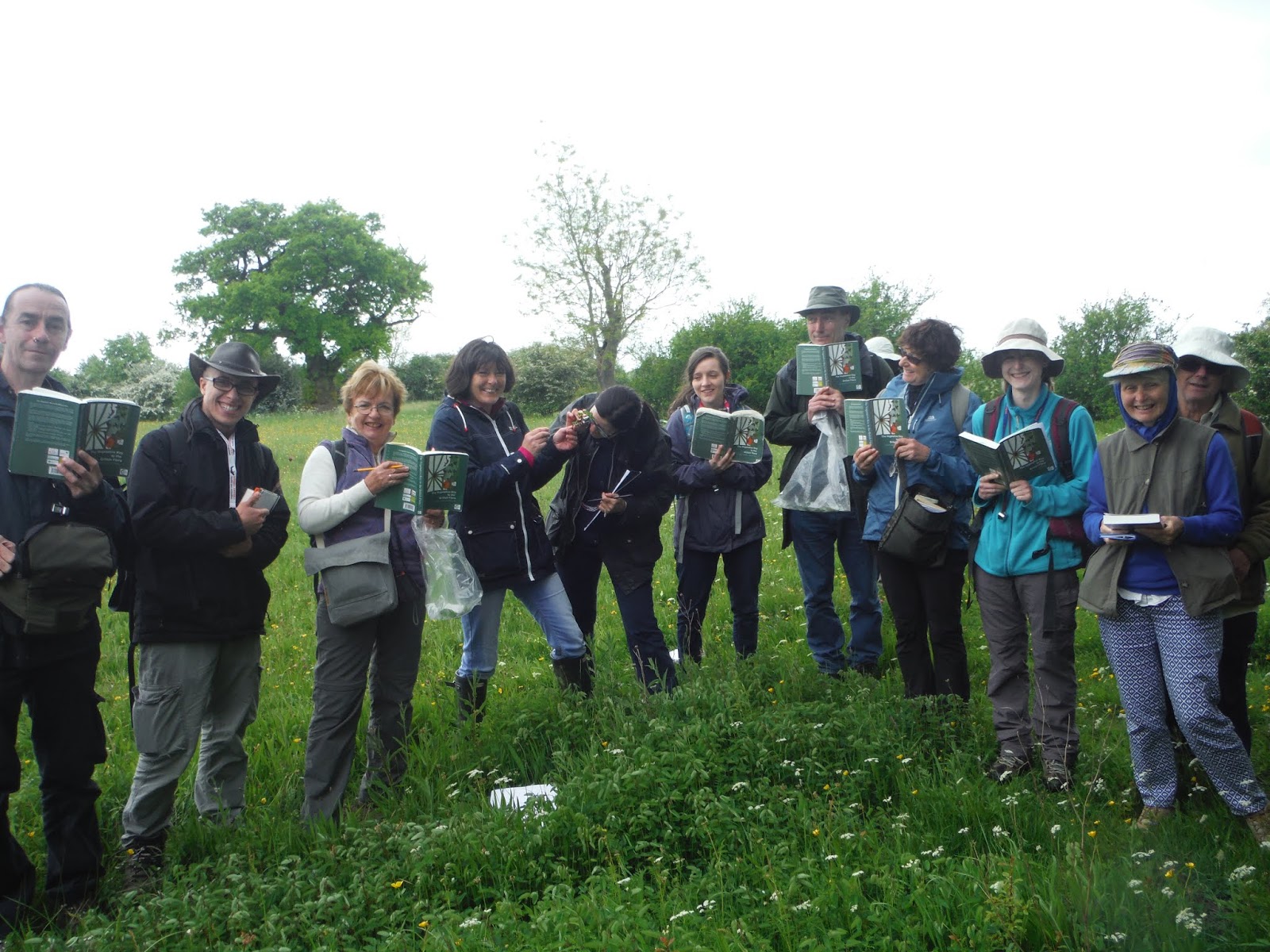
And once you have your copy, why not get in touch and let us know what you think about it? Or send us a photo of you and your botanical colleagues using the new Veg Key? Like the one below - students on the LUBG 'Botany for Beginners' course all using Veg Key 1st ed to get started with plant ID!