Monday, 27 July 2020

Wildflower of the Month: July: Sulphur Clover

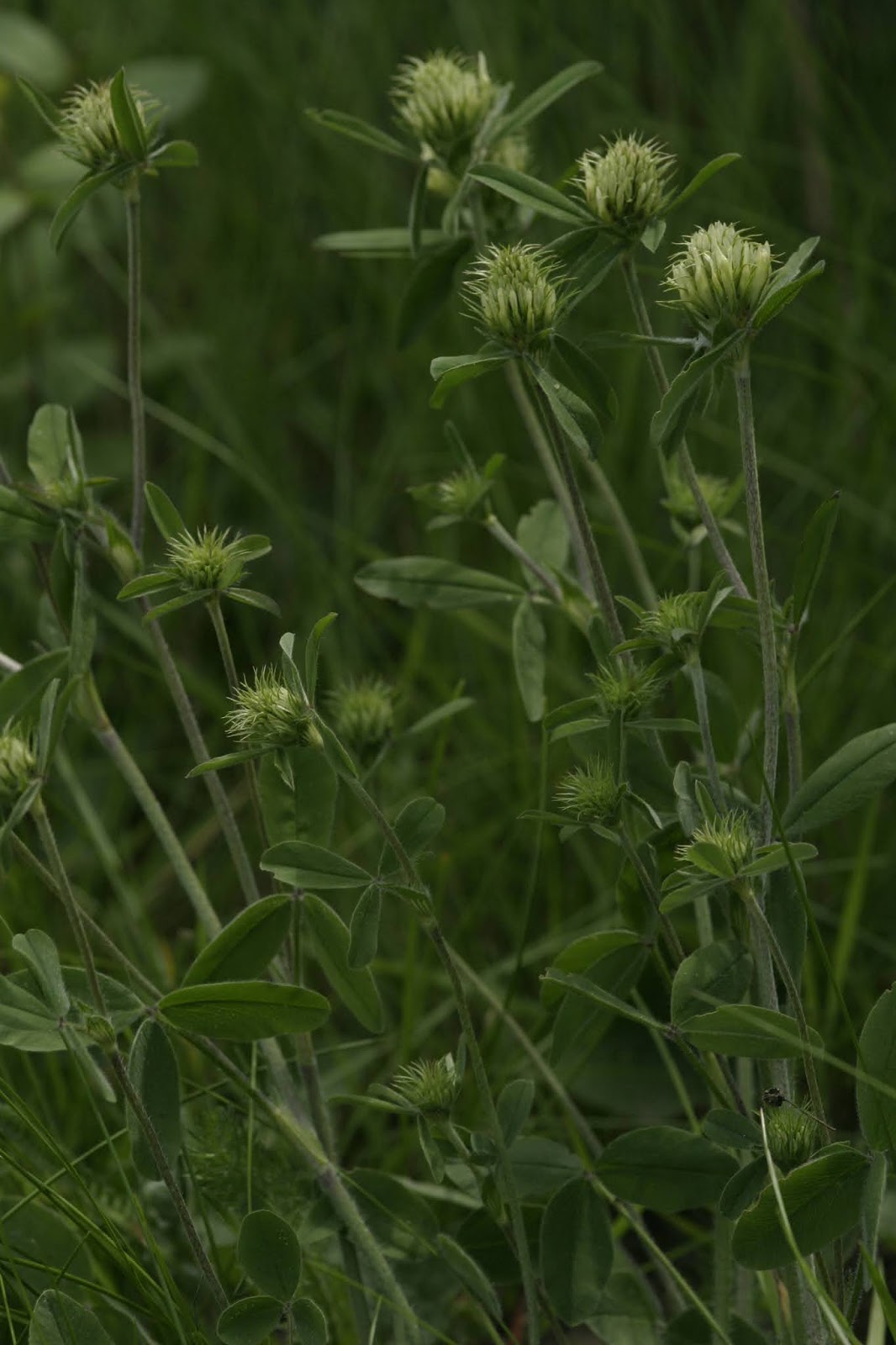
Sulphur Clover at Brampton
Meadow SSSI, Hunts.
Image: K. J. Walker
This year, BSBI Head of Science Kevin Walker has been focusing each month on a different wildflower. From March's purple saxifrage to June's bee orchid, we've all found out more about some of our best loved and most iconic wildflowers. But July’s Wildflower of the Month is a plant that many people are unlikely to have heard of, never mind seen. 

Over to Kevin to tell us more:

"Sulphur Clover Trifolium ochroleucon, a lovely pale-yellow clover, is a speciality of grasslands on the boulder clays of East Anglia stretching in a wide arc around the fenland basin. Here you are most likely to stumble across it on one of the ‘protected road verges’ that are scattered across the six East Anglian counties. Due to the catastrophic loss of old meadows and pastures, these narrow strips of grassland are fast becoming wildflower arks for some of our most threatened species. If we needed a flagship species to encapsulate their plight then Sulphur Clover would be a good candidate; its recent history provides us with insights into why these road verges are so important and also the challenges their wildflowers face due to mismanagement, pollution and increased disturbance from human activities.

Sulphur Clover, Honeydon road verge
Image: P. Stroh
Post-glacial relic
"Sulphur Clover isn’t particularly rare by British standards. In conservation jargon it is Nationally Scarce, that is it occurs in less than 5% of the hectads (10 x 10 km grid squares) that make up Great Britain. Nor is it highly threatened – it’s title ‘Near Threatened’ means that it’s not quite ‘Vulnerable’ but then again certainly not of ‘Least Concern’, although I’d wage money on it being classified as ‘Vulnerable’ or even ‘Endangered’ on the next iteration of the GB Red List. But categorisations aside it is indicative of good quality habitat, the sort that is worthy of conservation at the local if not the national scale. It seems to be a pioneer species of raw mineral soils and as such is a poor competitor that was probably more suited to the harsh conditions that existed in East Anglia during the early post-glacial period before the development of woodland. So today it hangs on where summer droughts prevent the spread of more competitive species. Thankfully, like other perennial clovers it is probably quite long-lived and produces lots of seeds that are readily dispersed, most likely by animals and machinery (Walker, 2019).

Crested cow-wheat
Image: P. Stroh
Surveys
"I first became aware of Sulphur Clover when I worked at Monks Wood experimental station near to Huntingdon. It was something of a local celebrity with populations easily accessible during lunchtime walks. It even grew on the edge of the ride in Monks Wood although it had gone, possibly due to shading, before I arrived. In some local sites it grew in excellent company, most notably with Crested Cow-wheat Melampyrum cristatum and Bath Asparagus Ornithogalum pyrenaicum on a spectacular verge near to Honeydon in Bedfordshire, which I first visited with colleagues in 1997. [Ed.: if you'd like to see what  Sulphur Clover, Crested cow-wheat and other wild flowers look like growing on a protected road verge in Hunts., check out this short video by BSBI England Officer Pete Stroh].  

"The plant interested me so much that I devoted a chapter of my PhD to it. Using historical records I managed to trace 35 localities in ‘Old Huntingdonshire’ where it had been recorded in the past. Over two hectic summers I revisited 30 of these sites collecting information on populations sizes, habitats, threats and management. The results were worrying (Walker & Pinches, 2009). At only 13 sites could we find any plants, eight of which were on road verges. Even more alarming was the decline in old meadows and pastures; only four of 11 populations had survived. Thankfully one of the best sites was a SSSI in the middle of Huntingdon Racecourse where 1000s of plants occurred in a large area of species-rich grassland. We were not alone in charting the fortunes of this lovely plant. Around the same time similar surveys were carried out in Cambridgeshire, Essex and Norfolk. The results in some counties were even worse in Cambridgeshire, for instance, three-quarters of its populations had perished and it had virtually disappeared from meadows and pastures (Cadbury, 2012).

Sulphur Clover on a road verge
Image: P. Stroh
Causes
"So why had Sulphur Clover declined by so much? The simple answer was that many of its former grassland haunts had been ploughed-up or improved as farmers either shifted to arable or intensified grassland management. The few surviving meadow populations were often protected as SSSIs or County Wildlife sites. The declines on roadsides, though less marked, were more difficult to explain. A paper by Ken Adams in Essex provided some much-needed answers (Adams, 2007). The management of road verges had clearly changed dramatically over the last 100 years. Before the Second World War verges were usually cut by local farmers relatively infrequently and usually during the late summer. The arisings were often removed as hay and is some cases broad verges might have been grazed. Hedgerows would have been managed less intensively and inputs of nutrients from human activity, in particular from farming and cars, would have been negligible. 

Crested Cow-wheat on the road verge, Honeydon
Image: P. Stroh
"By the end of the C20th, however, the management had changed dramatically. Many roads had been widened to cope with increased traffic and cutting was carried out by contractors much more frequently and earlier in the year. Contractors also left the cuttings in place thereby increasing soil fertility. Further eutrophication was caused by deposition of nutrients from adjacent farmland and from traffic and other airborne sources. As a consequence, our roadsides have become less diverse and dominated by a small number of tall grasses and herbs such as Cow Parsley Anthriscus sylvestris.

Sulphur Clover
Image: P. Stroh
A last refuge?
"A few years ago Plantlife published an excellent report on the importance of road verges for our threatened wildflowers (Plantlife, 2017). This included a league table in which Sulphur Clover came in fourth with 68% of its populations confined to road verges, although those above it were confined to just a single or a handful of sites. So road verges really are its final refuge. If we are to save it and many other roadside wildflowers for future generations, then we need to improve their protection and management.

"One of the key problems we face is making sure that highway managers know where the best road verge sites are. This might sound simple but it has so far proved problematic. We can erect signs, posts and big flashing beacons but this still doesn’t stop contractors trashing them with depressing regularity. Wouldn’t it be great if we could set-up a national inventory of the best sites that could be easily accessed by all those involved in their conservation and management? This can’t be beyond our wit! Most county councils have a list of protected verges and many have undertaken surveys to establish which wildflowers are present. Combining this information with the BSBI’s records on a webpage could be a game-changer for our roadside wildflowers if sufficiently well-publicised and supported.

Crested Cow-wheat and Sulphur Clover
on the verge: Stocking Lane
Image: P. Stroh
"Once they are ‘on the map’ then we need to ensure that road verges are managed appropriately. Thanks again to the efforts of Plantlife, we know what good management looks like. Their best practice guidance provide highway managers with all they need to know – in a nutshell, cut at least once a year but only after plants have had a chance to seed, remove the cuttings and, if you can, maintain a bit of structure to benefit other wildlife (Plantlife, 2016; Bromley et al., 2019). And this campaigning appears to be paying dividends; highway managers in different parts of the country are starting to manage road verges with wildflowers in mind. There is still a long way to go but at least there is now more hope for the road verge specialities such as Sulphur Clover, Crested Cow-wheat and Bath Asparagus. By increasing awareness and improving management, their life on the edge of our highways and bye-ways may not be as precarious as it once was".

References
Adams, K.J. 2007. Notes on Essex specialities. 12: the status and distribution of Sulphur clover, Trifolium ochroleucon Hudson, in Essex and Eastern England. Essex Naturalist 24: 115-118.
Bromley, J., McCarthy, B. & Shellswell, C. 2019. Managing grassland road verges. A best practice guide. Plantlife, Salisbury
Cadbury, C.J. 2012. Sulphur Clover Trifolium ochroleucon: its decline in Cambridgeshire (v.c.29). Nature in Cambridgeshire 54: 44-53.
Walker, K.J. 2019. Trifolium ochroleucon Sulphur Clover, in P. Stroh, K.J. Walker, S. Smith, R. Jefferson, C. Pinches & T. Blackstock (comp. & eds.). Grassland plants of the British and Irish lowlands. BSBI, Durham, pp. 307-308.
Walker, K.J. & Pinches, C.E. 2009. The status of Trifolium ochroleucon in Huntingdonshire. Nature in Cambridgeshire 51:3-12.

Sunday, 26 July 2020

Nature up close and personal: a well-being experiment

Our colleagues at the UK Centre for Ecology & Hydrology have been in touch to tell us about an exciting new research project developed to investigate the relationship between nature connectedness, citizen science and well-being, especially in the context of Covid-19. They are hoping that News & Views readers will take part in this project, which will help UKCEH make recommendations on the most effective ways to engage with nature for well-being.

Over to the UKCEH team to tell us more:

"During this period of lockdown and social isolation, many of us have learned (or re-discovered) the importance of engaging with nature to our happiness and well-being.
Maybe we are noticing nature more in gardens and parks, the countryside, or simply looking from our windows. Engaging with nature will remain valuable, even as lockdown restrictions are being eased. But what we don’t yet know, is how different types of nature activities affect us.

"To help answer this question the UK Centre for Ecology & Hydrology (UKCEH), University of Derby and the British Science Association is asking members of the public to take part in a research project ‘Nature up close and personal’. This project will take place across six weeks and will determine what affect interacting and being aware of nature has on well-being.

"By joining in, you’ll be asked to take part in simple, nature-based activities, allowing you to experience nature up close and personal – spending 10 minutes or so each day, for five days over the course of one week. You will be asked a few short questions, to learn more about your experiences. Whether you’re a nature nerd or nature usually passes you by – this is for you".

Dr Michael Pocock, an Ecologist at the UK Centre for Ecology & Hydrology, who is leading the project, hopes it will provide new evidence around the benefits of citizen science:

“Although there is already lots of evidence of the positive impact the natural environment has on our well-being, many of the studies have been on exposure or time spent in natural spaces, rather than how engaged with nature people are. We hope that through this new project, we will discover the impact of different types of nature-based activity on our well-being and connectedness with nature.”

“Hopefully, we will even be able to identify how different types of engagement with nature provide different impacts on the participants. We can then make evidence-based recommendations on how to develop activities to help mitigate the negative effects of social isolation. This is particularly relevant now with the effects of the COVID-19 crisis.”

"The ‘Nature up close and personal’ project runs for a duration of six weeks from 14th July 2020 until 25th August 2020. Participants can sign up at any point over the six-week period, then participate in their nature-based activities across one week. The participants will be divided into five groups, each doing a different nature-based activity – from noticing to recording nature.

"A private garden or access to masses of open space is not required – a local park, patch of weedy ground, or even a balcony is all that is needed. And with activities taking between 10-15 minutes a day, the project team hope that even the busiest of people will be able to easily join in.

"Together we can discover how our well-being is affected noticing nature up close and personal". 

Check out this short video about the project - you can also find it on the new BSBI YouTube channel on the Biological Recording playlist and then head over here to take part: www.ceh.ac.uk/natureupclose. "

Thursday, 16 July 2020

Remembering botanist and apothecary James Petiver (c1663 - 1718)

Royal Society Publishing has published a special issue of Notes and Records, their Journal of the History of Science, called  Remembering James Petiver.

Petiver was a C17th botanist and apothecary who corresponded with John Ray and Carl Linnaeus

The special issue marks the 300th anniversary of Petiver's death and provides the most comprehensive academic account of Petiver's career yet published, combining his known biography with new research; it accounts for Petiver's formation as urban apothecary and botanist, his emergence as public natural historian in the mid 1690s, and his subsequent career as natural history collector and author.

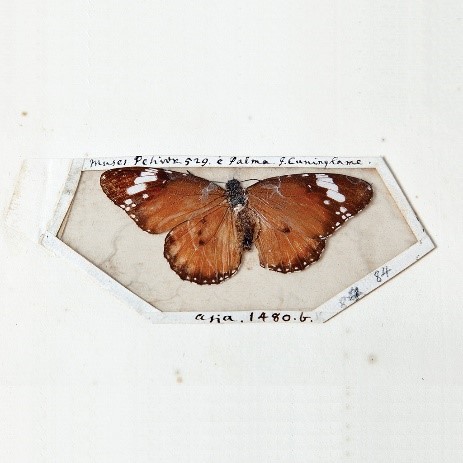
Petiver's botanical and entomological collections - photo above right of one of Petiver's specimens -  were bought by Hans Sloane and his herbarium specimens are now part of the collection held at the Natural History Museum,London

The special issue is organised and edited by Richard Coulton and Charles E Jarvis. It is  currently free to access here: https://royalsocietypublishing.org/toc/rsnr/2020/74/2 and there is also a blog post here: https://royalsociety.org/blog/2020/05/remembering-james-petiver/ 

Wednesday, 15 July 2020

Being a busy bee: BSBI President goes all entomological!

Fly orchid
Image: Sue Brindle
In late May, we heard from BSBI President Lynne Farrell who had been out looking for - and finding - Fingered Sedge in her local area while the whole country was under deep lockdown and none of us could go too far from home. A month later, Lynne was able to go a little further afield (while still following Government guidance, of course) but one of her most interesting finds was actually made much closer to home! 

Over to Lynne:  

"After my local walking survey of Carex digitata (Fingered sedge), I have moved on to search for Ophrys insectifera (Fly Orchid) in the South Lakes, as I am now allowed to drive to visit sites. However, due to the very dry and hot weather we experienced in May and early June, this has not been so successful. Some of the populations have been located, often with local people accompanying me at a safe distance, in the field. But many of the early-flowering orchids have been struggling with the unusually clement weather, which is not what I would have expected for species that enjoy Mediterranean conditions. At several sites there were shrivelled rosettes, which did not look at all like they would produce inflorescences, and indeed many of them did not, and simply fizzled out. A few did survive and an image of a fine spike growing on the Arnside reservoir grassland was visited by people keen to see it on their walks (photo above right). It is a species with a relatively short life-span, often no more than 5 years for an individual plant, and it prefers edges of woodland/grassland, so populations fluctuate anyway, and sites ‘disappear’ when they become overgrown. Perhaps readers can let me know how Fly Orchid has fared in their patches?

Wool Carder Bee
Image: Rob Petley-Jones
"But the fine weather has benefited other species, and many friends have reported the buzzing of the bees in their gardens and out in the countryside. Sitting on my garden bench one hot afternoon, I was suddenly aware that the orange Buddleja globosa behind me was alive with literally 100s of bees. I got my Field Guide to Bees out and found at least five species, sending a few images to local entomologists. Friends Ron and Jane Petley-Jones, also keen gardeners, came round to help with further identification, take Buddleja cuttings, and have tea in the garden, during which time Rob took more photos, saying he thought one bee, resting on my rockery, was especially interesting. This turned out to be an Anthidium manicatum (Wool Carder Bee), which is widely scattered in England and Wales but not that common, and very attractive (photo on left).The males have abdominal spines, which they use to defend their territory round a patch of flowers, usually in the Lamiaceae family, head-butting, wrestling, crushing and even killing intruders. As the Field Guide says, it is a robust bee. So I have been Buddleja-watching for several weeks now. The dark purple ‘Black Knight’ is about to come into bloom.

The Phantom Hoverfly on Arnside Knott
Image: L. Farrell
 "Of course, I have been up Arnside Knott again as I live very nearby, keeping an eye open for various plants, but I also managed to photograph an unusual flying object (photo on right). This turned out to be even more exciting than the bee, as it was identified as The Phantom hoverfly Doros profuges, a UK BAP species, mainly found in the Weald, at one site in N. Lancs, and strangely, one caught in a malaise trap in 1991 on Mull (yes, in "my" vice-county). Rob got very excited when I sent him my photo and came over the next day, as Doros only flies for 2-3 weeks, so I had to go up the Knott again! The news hit the hoverfly network and even Stuart Ball and Roger Morris, authors of Britain’s Hoverflies Wildguide, expressed delight. The book says ‘unmistakable due to its size and wing-markings’ and ‘extraordinarily difficult to find, even at its few well-known sites’. However, it now has a new British site, and I am very pleased with my recent entomological observations.

"Keep your eyes open when out botanising folks, you never know what else you will find".

I love the fact that the President of the Botanical Society is also finding rare invertebrates at new locations! We may not all have Lynne's huge network of contacts across all branches of wildlife and nature conservation, but we can certainly emulate her by keeping our eyes peeled as we explore our local patches, noting and photographing what we see and using the internet to find local contacts in biological recording networks. Happy hunting! 

Tuesday, 30 June 2020

British & Irish Botany: Vol 2 Issue 2 out now!

Rare Spring Sedge
Image: Pete Stroh
 
The latest issue of British & Irish Botany has just been published. It's our first issue since we entered lockdown (the last issue was published in February), which has made it impossible for botanists to travel very far from their home patch. So many of the wonderful field meetings and workshops we had planned for you this year have had to be cancelled or postponed! 

But with this latest issue of BSBI's Open Access, online scientific journal, you will be able to travel virtually to locations such as the Scottish Highlands, the Sefton coast in northwest England, the chalk grasslands of southern and eastern England, to South Tipperary (yes it is a long way there...) and as far afield as Fair Isle! 

Read on to find out about the seven papers in our June issue.

First up we have BSBI Head of Science Dr Kevin Walker and England Officer Pete Stroh telling us about changes in the distribution and abundance of Rare Spring Sedge Carex ericetorum. 


Lathyrus latifolius spreading on
the Ainsdale dunes
Image: Phil Smith
If you don't know this rare sedge (yep, there's a clue in the name!) then check out the Species Account on the BSBI website and take a look at the latest BSBI distribution map for the species. 

Phil Smith whisks us away to the Sefton coast to consider the non-native taxa occurring in the coastal sand-dune system. Some of those aliens are showing invasive characteristics: Phil talks us through what those species are, what proportion of the local flora they represent and whereabouts in the dune system they are causing problems. Phil also calls for further studies so that strategies for effective control can be formulated and enacted. 


Stuckenia x suecica growing in the river at
Camus Bridge on the River Suir, Co. Tipperary
Image: Rosaleen Fitzgerald
Chris Preston and Rosaleen Fitzgerald report on an extensive newly-discovered population of a hybrid pondweed from a 60km stretch of the River Suir in South Tipperary. Stuckenia x suecica is the hybrid between slender-leaved pondweed and fennel pondweed but here in Ireland, as in Yorkshire where the hybrid is also recorded, slender-leaved pondweed (the rarer of the two parents) is out of range. Chris and Rosaleen unpick the mystery in their paper.

Nick Riddiford et al. tell us about the wild and naturalised flowers recorded on Fair Isle, including an impressive list of eyebrights Euphrasia spp.. Chris Metherell, co-author of the BSBI Handbook on eyebrights, is also a co-author on this paper. Take a moment to enjoy images of some of the gorgeous eyebrights recorded on Fair Isle and, thanks to Chris, identified with confidence: 


Selection of Euphrasia species on Fair Isle
Image: Tony Vials
We also feature three papers about hawkweeds in this issue. Interest in this challenging genus is high at the moment thanks to the new BSBI Handbook, the 20th in the series: Mike Shaw's  Hawkweeds of southeast England. I have to admit here that as a humble Comms Officer and Editorial Assistant on British & Irish Botany I've managed to avoid hawkweeds so far - there's a good reason for their reputation as one of the most difficult genera in the British flora! So I'll hand over here to my esteemed colleague Dr Ian Denholm, Editor-in-Chief of British & Irish Botany, to tell us more about these three new papers and why we should all learn to love hawkweeds: 


Drummond's Hawkweed at possibly
the only location in the world
where it still occurs.
Image: Tim Rich
"The first of Tim Rich’s two papers as sole author explores the current status of Drummond’s Hawkweed Hieracium drummondii, a rarity only ever recorded from a handful of locations in Scotland. Alarmingly, searches of these sites turned up just one extant colony in Kintyre. Since this species is endemic to Scotland, it is now in severe danger of global extinction. Tim’s second paper uses a combination of morphometrics and field work to demonstrate that previous records from Britain of a different Hieracium species, H. lanceolatum, are erroneous, exemplifying the difficulties of resolving the status and distribution of taxa distinguished by only slight differences in morphology. A third paper produced by Tim with colleagues from the Czech Republic uses a powerful tool called flow cytometry to investigate levels of ploidy and the genetic origins of species in two sections of the Hieracium genus. Instead of detecting difference in DNA sequences, flow cytometry measures the total amount of DNA present in cells and is a rapid alternative to the time-consuming and technically-challenging (and increasingly unfashionable) approach of observing and counting chromosomes directly". 

So there you have our first locked-down issue of British & Irish Botany which takes us not only to locations across England, Ireland, Scotland and Fair Isle but even to laboratories in the Czech Republic. And all without leaving the safety of our homes. If the recent months have left you with time on your hands to write up a recent botanical discovery, we'd love to hear from you. You can either submit a paper for consideration by Ian here or drop him an email to bib@bsbi.org - he'll be happy to talk through your proposal. 

Monday, 29 June 2020

Wildflower of the Month: June: Bee orchid

Bee orchid at Monk's Wood, Cambs.
Image: Kevin Walker
In recent months Dr Kevin Walker, BSBI Head of Science, has been focusing on a different wild flower each month. In March it was purple saxifrage, in April it was snake's-head fritillary, May's Wildflower of the Month was meadow saxifrage, and now Kevin focuses on a plant we usually think of as blooming in June on calcareous grasslands in the south. Except that's no longer the whole story... 

Read on to find out what Kevin has discovered about one of our most popular and iconic orchids! 

"Orchids are our most glamorous wildflowers. They are an entry point for generations of botanists and even pique the attention of birders when the flow of spring migrants dwindles to a slow trickle in late May. Their exquisite beauty, complex sex lives and often extreme rarity gives them an allure that is hard to resist and can lead to life-long obsessions. As BSBI member Leif Bersweden captures so beautifully in The Orchid Hunter, it was the discovery of a Bee Orchid as a boy that got him hooked. Leif is in good company. Charles Darwin devoted much of his later life to the “various contrivances by which British and foreign orchids are fertilised by insects” – a book with superb descriptions and line drawings of the fascinating sex lives of many British species.

What's the collective noun for bee orchids:
a swarm?
Image: Rebecca Wheeler
"June is the premier month for orchid hunting. Many of our c50 species flower in quick succession and, if you are lucky enough to know where to look, there are well trodden paths to all but the very rarest species. Wisely, the hallowed locations of the likes of Lady’s-slipper, Red Helleborine and the ethereal Ghost Orchid remain under wraps. The most talked about orchid of them all is the Bee Orchid Ophrys apifera. This colourful mimic, with its bee-like flowers, is one of our most widespread orchids and increasingly the one you are most likely to find closest to home.

"Historically its beautiful blooms were to be searched for in chalk downland, coastal dunes and damp meadows and pastures. But today it is as likely to be encountered on urban road verges and waste ground, or as a colonist of quarries and gravel pits in the early years of succession to more stable grassland and scrub. If you live in England and have never seen one then ask around. Most botanists will know where to find one.

Bee orchids in a sward
Image: Richard Bate
"The fortunes of the Bee Orchid are worthy of a book in itself. It appears to be on the move both ecologically and geographically and these changes are providing tantalising insights into how our environment is changing; if these early indications are correct, it may well be the ‘canary in the cage’ when it comes to climate change and plant conservation.

Close to home…
"One of the wildlife highlights of these long lockdown months has been the abundance of wildflowers in urban areas where councils have relaxed their mowing regimes. This, combined with Plantlife’s #NoMowMay campaign, has led to a surge in records of Bee Orchid. Since it was first reported in flower on the 15th of May by Dr Richard Bate, Twitter has been alive with records, many from garden lawns: participants in the BSBI’s Garden Wildflower Hunt have been sending us records of bee orchid sightings in their gardens and telling us how delighted they were to welcome these visitors!

"My nearest colony is about fifty metres from my front door. I’ve been keeping a close eye on this little colony and these observations have been very revealing. The first thing to note is that it is flourishing on a very ordinary roadside verge which can only be described as a billiard table. Most of the plants rarely, if ever, get a chance to flower; those that do have to endure football games and mowers and this year a severe frost in late April followed by a month-long drought in May. Many blackened off and died back. A few have flowered probably a week earlier than normal. Flowers first appeared on “my” bee orchids on the 2nd of June. In normal years (whatever that now means!), they are usually at their peak between 9th to 24th June. Anecdotally botanists tell me that it was never worth looking for their flowers before mid-June.

A meadow full of bee orchids and other
native wildflowers
Image: Rebecca Wheeler
"What’s also revealing about “my” colony is its location. It’s not particularly special – just some grass strips in a modern housing estate built on a former MoD site in the 1990s. The grassland, which is not totally devoid of interest (Knotted Clover Trifolium striatum grows with the bee orchids), could have survived the construction work or was possibly seeded afresh, creating ideal conditions for Bee Orchid – which likes bare ground - to colonise.

"So it is not surprising that we are getting lots of reports of Bee Orchids in garden lawns. This reminds me of another orchid that made a spectacular appearance in gardens after the scorching summer of 1957. Severe drought meant that many lawns were left uncut and this led to flurry of reports of Autumn Ladies-tresses Spiranthes spiralis from gardens, so much so that it was reported in The Times. This mass seeding event lead to a dramatic increase in populations in subsequent decades, so perhaps an unintended consequence of this lockdown will be a similar increase in Bee Orchid colonies in years to come?

Spreading north…
Graph showing northward spread of
bee orchid over time
Graph by Kevin Walker
"Scientists have shown, unequivocally, that some butterflies, dragonflies and birds are expanding their ranges northwards as climate change opens up new areas of habitat to them. Evidence for plants is much harder to come by: maybe that’s not that surprising. Wildflowers are by nature sedentary; they don’t move much and if they do, their dispersal is measured in metres rather than kilometres. The main exceptions are orchids. Each flower produces thousands of dust-like seeds and these can be dispersed over large distances by air currents. It has even been suggested that the North American orchid known as Irish Lady’s-tresses Spiranthes romanzoffiana, a rare plant of the western seaboard of Britain and Ireland, might have been blown across the Atlantic during gales. The attractive Mediterranean tongue orchid Serapias lingua appeared in Essex a few years ago and again wind dispersal has been mooted as the means by which it arrived on our shores. In both cases there are other theories but the most parsimonious would seem to be wind. 

Bee orchid
Image: Richard Bate
"Of all the British orchids, Bee Orchid has shown the most spectacular increase in recent decades. Back in the 1960s, it was largely confined to grassland in southern and south-eastern England with odd records stretching as far north as County Durham. Since then it has been gradually extending its range northwards (see the graph above) especially in northeast England where it has spread along the coast. It was first recorded in Scotland in 2003 and now occurs as far north as Glasgow and Edinburgh, and I’m sure it will spread further, probably in sandy grassland along eastern and western coastlines, in the not too distant future.

"As intimated above it also appears to be broadening its ecology. In the first edition of Clapham, Tutin and Warburg’s Flora of the British Isles, published in 1952, its habitats were described as “pastures, field-borders, banks and copses on chalk or limestone, especially on recently disturbed soils; also on base-rich clays and calcareous dunes.” Today you are as likely to see it off calcareous soils as on them, on roadside verges, spoil heaps, urban waste ground, disturbed soils in old quarries and gravel pits and abandoned farmland.

Seeds of its success…
Bee orchid close-up
Image: Richard Bate
"So what is the secret of the Bee Orchid’s success when so many other wildflowers have declined? Despite its bee-like appearance, self-fertilisation appears to be the norm rather than deception to entice cross-pollination by bees (as in other Ophrys species). Unlike some other orchids, individuals can continue to flower for a number of years. As a consequence, populations are likely to grow very quickly. This coupled with its ability to spread its seed far and wide means that it can quickly colonise new habitats as they come within reach.

"Like most plants, orchids face a trade-off when it comes to seed size. Dust-like seeds are great for getting around but do not have enough food to support the growing embryo once they land. Many orchids strike a deal with soil mycorrhizae gaining nutrients from the fungus as they grow. But this is the Achilles heel of many orchids species and the reason they are so rare; highly specialised relationships severely restrict where they can grow. We can only assume that the Bee Orchid has chosen a range of very widespread and common fungi with which to share its food.

Bee orchid rosette with 20p coin
standing in for a scale bar
Image: Kevin Walker
"But possibly at the root of its success has been its ability to adapt to rising temperatures in recent decades. Bee Orchids are wintergreen; in fact, winter is the easiest time to spot their distinctive rosettes. Many participants in BSBI’s New Year Plant Hunt spot the rosettes while they are out looking for wild plants blooming in midwinter. Mike Waller’s Beginner’s Vegetative Guide to Orchids of the British Isles is very helpful for anyone who isn’t sure what to look for. As our winters have become less severe, Bee Orchids have clearly benefited especially in urban and coastal areas, where severe frosts are less common.

"We humans have accentuated these trends by creating the disturbed, early successional conditions that they seem to love. Since the 1950s we have transformed our lowland landscapes through a massive expansion in road and rail networks, industrial land, waste ground, restored colliery and landfill, and abandoned quarries and gravel pits. Bee Orchids have benefited from these transformations.

"So the Bee Orchid is probably the nearest wildflower we have to a ‘canary in the cage’; its fortunes tell us much about how our climate and landscapes are changing. But more than that, this adaptable little orchid continues to enthrall and excite us; as the celebrated and much-loved illustrator Cicely Mary Barker observed in her ‘Song of the bee orchis fairy’, a day when you discover a Bee Orchid is always 'your luckiest day'!”